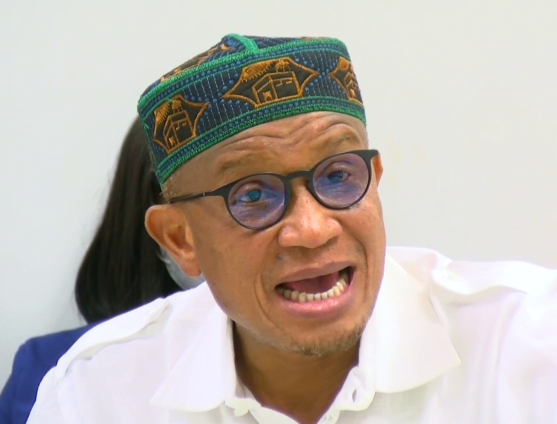
Former Chief Executive of the National Petroleum Authority (NPA), Dr. Mustapha Abdul-Hamid, and nine others were today, Tuesday, December 9, arraigned before the High Court on a 54-count charge sheet.
The charges relate to alleged extortion, abuse of public office for profit, money laundering, and conspiracy, stemming from an investigation by the Office of the Special Prosecutor (OSP).
All ten accused persons pleaded not guilty when they appeared before Criminal Court 4.
The OSP’s investigation, which spanned 2022 to 2024, alleges that key officials at the NPA exploited their regulatory powers to extract over GH¢291 million and US$332,000 from Oil Marketing Companies (OMCs) and transporters.
This translates to an alleged criminal enterprise exceeding US$24.5 million, highlighting the significant financial implications for the nation’s petroleum sector.
According to prosecution documents, the illicit funds were allegedly laundered through three companies linked to the accused. These funds were then reportedly used to acquire assets such as lands, residential properties, fuel stations, and haulage trucks.
The NPA, established under the NPA Act 2005 (Act 691), is responsible for regulating the downstream petroleum industry, including licensing, pricing, and quality control. The prosecution intends to demonstrate that the accused abused this regulatory authority for personal gain.
The OSP had previously frozen over GH¢100 million in assets and bank accounts connected to the investigation to prevent the dissipation of potentially illicit wealth.
The High Court has adopted the initial bail terms set by Criminal Court 3, with an added requirement for the accused to report to the court registrar on the first and last Tuesdays of each month.
The prosecution has been directed to submit all necessary disclosures to the defence by January 12, 2026. A Case Management Conference (CMC) has been scheduled to determine the trial’s timeline.
This trial represents a crucial step for the OSP in its efforts to combat systemic corruption within Ghana’s vital economic sectors.
Image Source: MYJOYONLINE