Chinese Ambassador Calls for Fair Mining Sector News Coverage
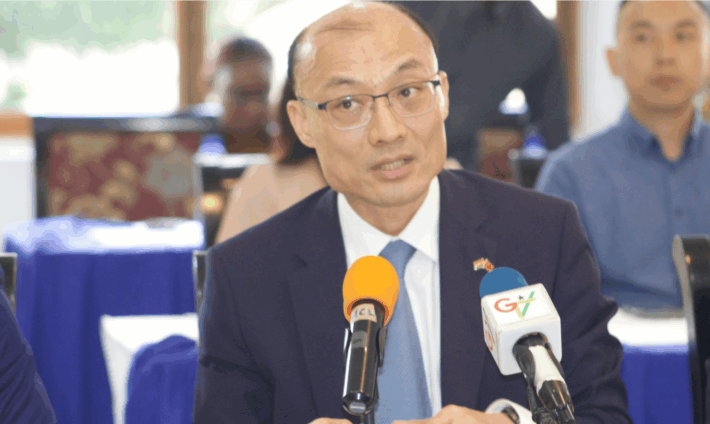
Chinese Ambassador to Ghana, Tong Defa, has called on Ghanaian journalists to adopt a more balanced and comprehensive approach when reporting on the mining sector, particularly concerning Chinese companies operating within the country.
Mr. Tong emphasized that responsible journalism is crucial for strengthening ties between China and Ghana, and for fostering sustainable mining practices. He made the appeal at the opening of a three-day training workshop on Sustainable Mining for Journalists held in Aburi.
While reaffirming China’s support for Ghana’s fight against illegal mining, commonly known as ‘galamsey’, the Ambassador stressed the importance of highlighting the positive contributions of legitimate Chinese mining firms to Ghana’s national development.
The workshop, organized by the Ghana News Agency (GNA) in partnership with the Association of China–Ghana Mining (ACGM), aims to equip journalists with the necessary knowledge on sustainable mining, ethical reporting standards, and regulatory compliance.
Participants included journalists and resource persons from various backgrounds – regulatory bodies, academia, and the mining industry itself.
According to Mr. Tong, Chinese companies operating legally in Ghana have become significant partners in job creation, community development, technology transfer, and responsible mining. However, he noted that these contributions are often overshadowed by the negative publicity surrounding the activities of a few involved in illegal mining.
“As the Chinese Ambassador, I feel a little bit unfair. Chinese people involved in galamsey represent a very small minority,” he stated. “There are thousands of Chinese companies doing well in the country and making huge contributions to the community. These big companies focus on long-term and sustainable mining in this country.”
He urged journalists to “report comprehensively and objectively about China,” believing that accurate reporting would significantly improve relations between the two nations.
The Ambassador specifically mentioned Shandong Gold, Zijin Mining, Chifeng Gold, Xiaocheng Technology, and Tianyuan Manganese as examples of companies that consistently adhere to Ghana’s mining regulations, prioritize local employment, and invest in social development initiatives.
He highlighted the Cardinal Namdini Mine operated by Shandong Gold, where 94% of the 1,600 contractor staff are Ghanaian. Furthermore, he said the company has invested over $2 million in education, healthcare, sanitation, and community infrastructure, including a 25-kilometer access road connecting over ten communities.
Chifeng Gold, operating the Wassa Mine, has also invested approximately US$4.5 million in a Community Development Fund supporting schools, clinics, water systems, and road construction. They are also developing a medium-scale palm oil processing plant to bolster local agriculture, he added.
“These are only the tip of the iceberg,” Mr. Tong said, encouraging journalists to conduct more field visits to gain a deeper understanding of the impact these companies are having.
He reiterated China’s commitment to supporting Ghana’s mining reforms, environmental protection efforts, and overall industrial transformation. Recent discussions between President Xi Jinping and President John Dramani Mahama, he noted, reaffirmed China’s willingness to deepen cooperation in key sectors like mining, energy, agriculture, and infrastructure.
“China is willing to fully leverage its advantages to conduct full-chain cooperation with Ghana, from geological surveys and exploration to resource development and environmental protection,” the Ambassador explained. “We always urge enterprises to operate in accordance with laws and regulations and to crack down on illegal mining severely.”
Mr. Tong expressed his confidence that the workshop would foster greater understanding, promote cooperation, and encourage fair reporting that supports sustainable development. “The Chinese Embassy will continue to serve as a bridge for cooperation and encourage more responsible investment to support Ghana’s development,” he said.
Mr. Albert Kofi Owusu, General Manager of the Ghana News Agency, stated that the workshop was designed to enhance journalists’ capacity to report responsibly on mining and natural resource governance. He emphasized the media’s vital role in shaping public perception and ensuring accountability within the extractive sector, adding that the training would help participants appreciate the delicate balance between economic benefits and environmental sustainability.
Mr. Owusu noted that while mining remains central to Ghana’s economy, it faces significant challenges from illegal and unregulated activities that threaten environmental integrity and community well-being. He stressed the importance of collaboration between regulators, industry players, and the media.
Tang Zhenjiang, Chairman of the Association of China–Ghana Mining, highlighted the increasing investment by Chinese companies in local communities, including scholarships, infrastructure projects, solar power initiatives, and support for vulnerable groups. He emphasized that responsible mining must be accompanied by responsible reporting to ensure narratives accurately reflect the realities on the ground.
Image Source: MYJOYONLINE