CAP25: Empowering Climate Action Through Community Capacity Building
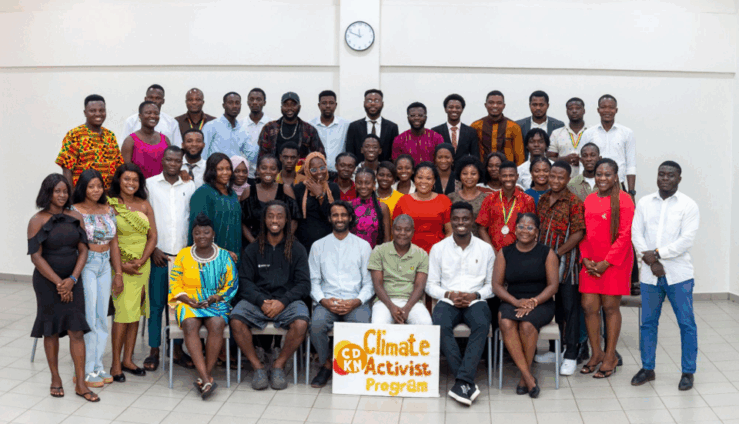
The Climate Development and Knowledge Network (CDKN) Ghana has concluded the 2025 Climate Activists Programme (CAP25), having trained 40 young Ghanaians to tackle local climate challenges.
The ten-day residential bootcamp, held at Ensign Global College and in partnership with Youth Empowerment for Life (YEFL-Ghana) and Ghana Venskab, focused on equipping the fellows with the skills to design and implement locally-led climate solutions.
This year’s programme combined theoretical learning with practical experience, featuring masterclasses in green entrepreneurship, advocacy, research, and creative arts. The curriculum also heavily emphasized climate science and policy, as well as leadership coaching and effective storytelling.
Participants engaged in a National Cleanup Day exercise in Kpong, a field trip, and an art day, culminating in a graduation ceremony. The ceremony marked their transition to the implementation and mentorship phase of the programme.
Dr. Prince Ansah, Country Engagement Lead for CDKN Ghana, highlighted the importance of contextual evidence. “The role of knowledge from a global perspective, and hinged on contextual evidence is important in ideating what type of action individuals take to address climate change impacts,” he explained.
He further added that regional inclusivity and gender equity were key priorities. “The goal is to be very intentional when it comes to regional inclusion, hinged on the core principles of gender and social equity,” Dr. Ansah stated.
Fellows were selected from both the Northern and Southern sectors of Ghana, with specific efforts made to include individuals from underrepresented regions. Technical support came from the Environmental Protection Agency’s Adaptation & Vulnerability Secretariat, the Office of the Minister of State for Climate Change & Sustainability, the UNFCCC Regional Collaboration Centre, UNEP in Ghana, and the Green Africa Youth Organisation.
The programme placed a strong emphasis on applied practice, allowing participants to develop and refine their project ideas through peer learning and expert feedback. These were then presented at the end of the bootcamp.
According to programme participants, CAP25 significantly enhanced their understanding of climate change issues. Improvements were noted in climate literacy, policy understanding, communication skills, and project management.
Mayfair Obeng-Gyimah, a Southern Fellow, shared, “Before CAP25, climate policy felt distant from everyday problems in my community. Now armed with new knowledge and a stronger network, I’m committed to advancing climate research that informs policy, empowers communities, and inspires collective action.”
Aminu Gafaru, a Northern Fellow, also remarked, “My thoughts on climate change being too technical have changed. Facilitators have whipped me up to critically engage in exercises and group work that enabled me to refine my eco-friendly project. And the knowledge gained has supported me to develop a project that promotes sustainability.”
Future iterations of CAP25 will incorporate lessons learned, including sustaining the blended learning approach, enhancing support for women in northern Ghana, and providing mentorship and seed funding to promising projects. Structured post-bootcamp coaching, partner matchmaking and field work to track project outcomes are planned.
The programme aims to deepen youth leadership in climate action, enabling fellows to contribute meaningfully to Ghana’s climate change objectives through contextually-relevant solutions.
Image Source: MYJOYONLINE