Thousands Flee Thai‑Cambodia Border After Deadly Clashes
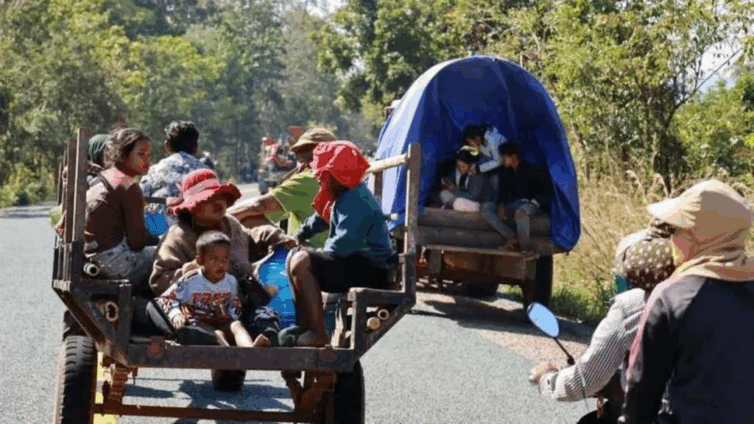
On Monday, fresh clashes erupted along the Thailand‑Cambodia border, forcing residents on both sides to evacuate and leaving at least five dead, as each government blamed the other for starting the violence.
Thailand’s Prime Minister Anutin Charnvirakul said the nation “never wanted violence” but will “use necessary means to preserve its sovereignty,” while former Cambodian leader Hun Sen accused Thai forces of being “invaders” provoking retaliation.
The latest skirmish follows more than 40 deaths since May and a series of import bans and travel restrictions that have disrupted trade routes used by Ghanaian exporters of rice and timber.
Thai officials reported that troops responded to Cambodian fire in Ubon Ratchathani Province with air strikes, whereas Phnom Penh’s defence ministry claimed Thai forces opened fire first in Preah Vihear Province. One Thai soldier and four Cambodian civilians were killed, and a dozen others wounded, according to statements from both sides.
For Thai teacher Siksaka Pongsuwan, the hidden victims are the children living near the frontier. “They are losing opportunities and precious time compared to peers in peaceful cities,” he told the BBC.
Nearly six hundred fifty schools across five Thai provinces have been ordered shut for safety, the education minister announced, while videos from Cambodian border provinces show frantic parents ushering children out of classrooms.
The disruption is not new. In July, fighting broke out during school examinations, prompting a shift to online lessons that many families could not access due to lack of internet or insufficient tablets.
Former Cambodian journalist Mech Dara shared footage of children fleeing their schools, writing, “How many times do these kids have to suffer the shocking environment? The nonsense fighting brings kids a horrible nightmare.” He also posted an image of a boy eating in an underground bunker, asking why families must seek shelter to eat.
Both governments have a history of rivalry over an 800 km border drawn after French colonial rule. A ceasefire brokered by Malaysia in July and later signed with U.S. President Donald Trump in October has repeatedly been suspended, most recently after Thai soldiers were injured by a landmine.
Ghana’s foreign service has urged both sides to honour the ceasefire, noting that regional instability can affect Ghanaian businesses and the safety of Ghanaian nationals working in Southeast Asia.
The situation remains fluid, with officials on both sides vowing to protect sovereignty while humanitarian groups call for immediate protection of schools and evacuation corridors for children.
Image Source: MYJOYONLINE