Benin Government Reports Casualties After Brief Coup Attempt
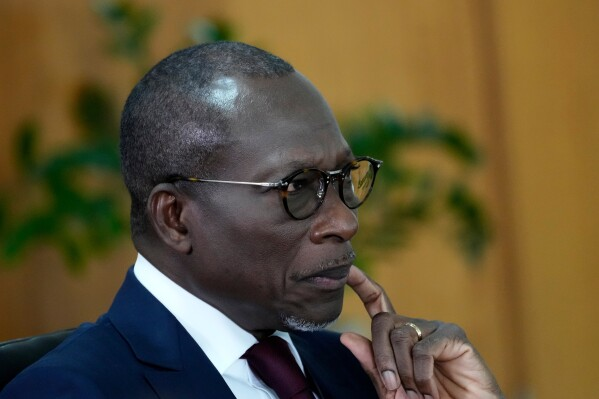
A short-lived coup attempt in Benin has been quelled, but not without casualties, authorities revealed on Monday. Security forces are currently intensifying their search for the leader of the mutiny, which attempted to overthrow President Patrice Talon.
The attempted takeover, the latest in a worrying trend of military interventions across Africa, reportedly stemmed from a combination of factors including disputed elections, constitutional changes, security concerns, and widespread youth discontent. According to Government Secretary Edouard Ouin-Ouro, the mutinous soldiers launched an attack on President Talon around 5:00 am on Sunday, but were ultimately overpowered by loyalist forces.
Benin received crucial support from neighbouring countries, with Nigeria playing a key role. The government confirmed that the Nigerian military deployed aircraft that successfully immobilised some of the armoured vehicles used by the coup plotters. While several arrests have been made, the main architect of the coup remains at large.
Two senior military officers who were held hostage during the unrest have been released, officials stated. However, the exact number of casualties sustained during the clashes has not yet been disclosed. An investigation is underway to identify all those involved in the coup and their backers, regardless of their affiliation, Mr. Ouin-Ouro added.
The coup unfolded when a group of soldiers, identifying themselves as the Committee for Refoundation, seized control of the national television station on Sunday morning. Led by Lt. Col. Pascal Tigri, the group announced the removal of President Talon, the dissolution of the government, and the suspension of all state institutions.
Lt. Col. Tigri had previously served as a member of President Talon’s security detail and commanded a National Guard battalion between 2023 and 2025. However, by Sunday afternoon, the coup attempt had been thwarted thanks to the combined efforts of the Beninese military and the intervention of Nigerian forces.
Calm has since returned to Cotonou, Benin’s administrative centre, although a visible military presence remains. President Talon himself described the coup as a “senseless adventure” and assured the public that the situation is under control. He vowed to punish those responsible and guarantee the safety of the hostages.
The Economic Community of West African States (ECOWAS) swiftly responded to the crisis, deploying a standby force to Benin to help safeguard the country’s democracy. This force comprised personnel from Nigeria, Ghana, the Ivory Coast, and Sierra Leone, although the exact number of troops deployed remains unclear.
A spokesperson for the Nigerian government confirmed that President Talon had requested assistance. This intervention marks a significant moment for ECOWAS, which hasn’t intervened militarily in a member state since 2017 when troops were sent to The Gambia to ensure Yahya Jammeh’s departure after his election defeat.
The bloc’s attempt to intervene in Niger following the 2023 coup faced resistance, resulting in a standoff and the eventual withdrawal of three junta-led countries from ECOWAS. Analysts suggest Nigeria has a strong strategic interest in maintaining stability in the region, particularly given its own ongoing security challenges.
“The coup in Benin is one too many. Nigeria cannot afford to be encircled by hostile governments,” stated Oluwole Ojewale, a senior security researcher at the Dakar-based Institute for Security Studies. Concerns are also being raised about ECOWAS’s inconsistent response to coups across West Africa.
“You can make the argument that Tinubu needed to show some strength in preserving democracy, but this now speaks to ECOWAS’ double standard,” said Cheta Nwanze, a partner at the Lagos-based SBM Intelligence geopolitical consultancy firm, referencing the bloc’s less assertive stance in Gabon and Guinea-Bissau.
Despite a history of political instability since gaining independence from France in 1960, Benin has enjoyed a period of relative calm in recent decades. The country is scheduled to hold presidential elections in April, with President Talon expected to step down after serving two terms in office.
Image Source: MYJOYONLINE