Dr Bawumia Demonstrates Quiet Courage in the Face of Adversity

The choice of title for his memoir – “Leaders Don’t Have to Yell” – is telling for former Ghana Black Stars coach, Kwesi Appiah. It echoes a sentiment increasingly relevant as the New Patriotic Party (NPP) prepares for its primaries, prompting a re-evaluation of what constitutes true presidential courage.
While the public discourse often centers on forceful personalities and aggressive rhetoric, a different kind of courage – one rooted in steadiness, resolve, and a willingness to operate within constraints – has become a defining characteristic of Dr. Mahamudu Bawumia’s political career.
Dr. Bawumia’s journey within the NPP has been marked by consistent advocacy, strategic participation, and engagement with policy, both during periods in opposition and in government. This has demanded adaptability and a measured approach, rather than relying on spectacle.
He played a crucial role during the party’s legal battles following the 2012 elections, demonstrating composure and a commitment to due process at a time of intense national tension. “At a time of heightened national tension, this required composure, preparation, and a willingness to operate within institutional constraints rather than public emotion,” the article notes.
Dr. Bawumia’s focus on digitisation, economic inclusion, and public sector reform, while attracting criticism, reflects a willingness to champion potentially unpopular initiatives for the greater good. As John Baldoni puts it, courage is “the willingness to stand in service of a greater good, even when such positions are unpopular.”
The article draws parallels with historical figures like Abraham Lincoln and Franklin D. Roosevelt, who exemplified leadership through emotional control and careful decision-making. Ernest Hemingway’s definition of courage – “grace under pressure” – is also highlighted as particularly relevant.
Furthermore, Dr. Bawumia’s gracious concession after the 2024 election underscores this quiet courage. “Courage doesn’t always roar. Sometimes courage is the quiet voice at the end of the day saying, ‘I will try again tomorrow,’” observes Mary Anne Radmacher.
As the NPP contemplates its future, the party is challenged to reassess its understanding of courage, moving beyond traditional notions of confrontation towards a more nuanced appreciation of prudence, deliberation, and restraint, as suggested by C. W. Reichard: “The deliberate life, not the belligerent, not the tempestuous and not the inflammatory life, has proven to be the heroic life.”
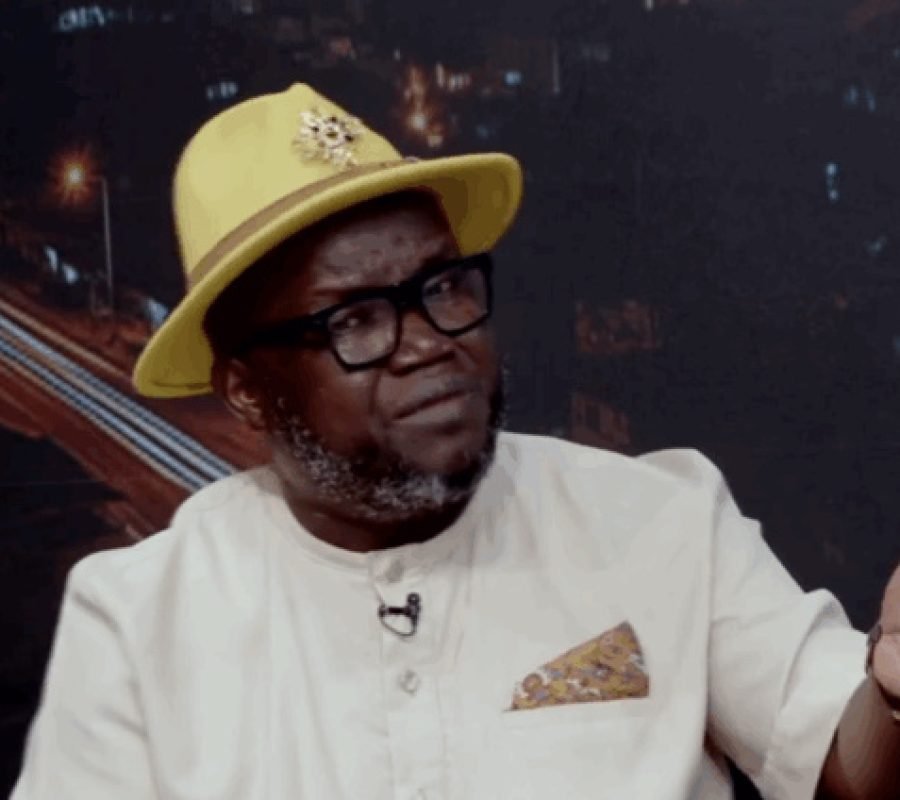
The piece is authored by Prof. Etse Sikanku, an Associate Professor of Political Communication and Media Studies at the University of Media, Arts and Communication.
Image Source: MYJOYONLINE