Cashew Farming in Ghana: Climate Boost or Food Risk?
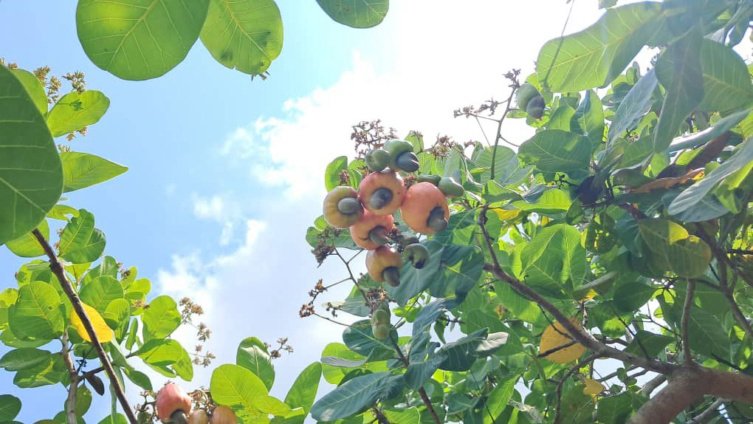
The landscape of Ghana’s traditional breadbasket is undergoing a dramatic and unsettling transformation.
Where fields of yams, maize, and vegetables once defined the horizon, a uniform sea of green cashew trees now stretches as far as the eye can see.
This shift is not by mere chance but a direct response to a harsh climatic reality: punishing droughts and increasingly unpredictable rains that are rendering traditional staples unreliable.
For smallholder farmers, the hardy cashew tree has emerged as a lifeline—a drought-tolerant cash crop that promises economic survival in the face of climate change.
Yet, its rapid and largely unregulated expansion is triggering a profound dilemma, forcing a painful choice between immediate cash and long-term food security, and drawing sharp warnings from regional authorities and traditional leaders.
According to a 2025 study conducted on climate change awareness by the Department of Environment and Resource Studies at the Simon Diedong Dombo University of Business and Integrated Development Studies (SDD-UBIDS), over 90% of farmers are acutely aware of climate change, with a majority witnessing the growing vulnerability of their traditional food crops.
“The maize fails, the yam struggles. But the cashew stands,” says Kwame Appiah, a farmer from Techiman. “Last season, it built a new room for my house and paid my children’s school fees. It is our lifeline now.”
This sentiment is driving an agricultural revolution.
The cashew sector now supports an estimated 300,000 farming families, with national ambitions to boost export earnings significantly. For many, it represents the most viable adaptation strategy to a changing climate.
However, this economic boom has a visible downside. In local markets like Techiman, traders lament the disappearance of local produce.
Akosua Mensah, a vegetable trader in Techiman, says, “We now sell expensive onions from Niger and tomatoes from Burkina Faso. We are harvesting cash but starving for food.”
The issue runs deeper than market prices. Food crop farmers report being systematically squeezed off the land. “How can I farm?” questions Yaw Boakye, a vegetable grower in Tuobodom. “All family and communal lands are being given over to cashew. If you find a small piece, the cashew trees have already sucked it dry. We are being strangled.”
The Bono East Regional Minister, Francis Owusu Antwi, has expressed “deep concern” over the uncontrolled conversion of arable land, calling it a “direct threat to our food sovereignty.”
Environmental officials warn that the ecological bill for this monoculture boom may be steep.
Osman Yuong, an Area Officer with the Environmental Protection Agency (EPA), states, “This mass conversion is a time bomb. It reduces biodiversity, destroys pollinator habitats, and degrades soil health, ultimately making the land more vulnerable to climate impacts like pests and erosion.”
Amidst the conflict, however, solutions are being cultivated. The answer, experts argue, is not to abandon cashew but to farm it intelligently through Climate-Smart Agriculture (CSA).
On a pilot farm, JoyNews found a promising model: cashew trees intercropped with cowpea and maize. This approach builds resilience, protects soil, and secures both income and nutrition.
“This model—integrating trees with food crops—is the future,” explains Okpoakpajor James, Founder and Director of Okpoakpajor Youth and Development Center, an NGO promoting sustainable practices. “We must move from a mindset of endless expansion to one of sustainable intensification and diversification.”
The cashew boom has laid bare a fundamental dilemma for a developing nation: how to harness global economic opportunities without weakening the local foundations of survival.
The unified message from the fields of Bono East is clear: unchecked monoculture is a recipe for long-term crisis.
The sustainable future lies in balance—in intentional policies, climate-informed land planning, and landscapes that consciously provide both cash and nourishment. The choice Ghana makes here will resonate far beyond its cashew groves, defining its climate resilience and food sovereignty for a generation.
Image Source: MYJOYONLINE