Africa's Forgotten AI Superpower: Indigenous Knowledge

The world is undergoing a technological revolution unlike any seen before, with artificial intelligence (AI) increasingly influencing areas from government risk assessment to medical diagnoses and agricultural practices. However, a fundamental flaw lies at the heart of this progress: a significant epistemic void that limits the scope of machine reasoning and perpetuates Western biases.
This void, experts say, is the absence of Indigenous and Ancestral Intelligence – the knowledge systems embedded in African oral traditions, rituals, and cosmological understandings of the world. This intelligence views land as a relationship, healing as harmony, and knowledge as a living continuum.
Crucially, this wealth of knowledge was never digitised or incorporated into the datasets used to train today’s AI models. This omission has resulted in systems that, while technologically advanced, lack crucial contextual understanding and can inadvertently reinforce existing inequalities.
Africa, the continent at the centre of this paradox, has contributed significantly to global data flows but reaps minimal benefits from the AI systems built upon that data. Its own rich knowledge systems remain largely unrecognised and underutilised in the shaping of global intelligence.
The Visionary Prompt Framework (VPF) Planetary Version offers a radical solution: the integration of Indigenous and Ancestral Intelligence into the very architecture of AI. The VPF acknowledges that true intelligence requires intellectual plurality and that the world’s oldest knowledge systems are vital for the future of AI governance.
At the core of this framework lies the Indigenous and Ancestral Intelligence Chamber, a unique component that goes beyond data classification and statistical patterning to encompass heritage, cosmology, spirituality, and intergenerational wisdom. It’s a digital space designed to hold the memory of civilisations and the codes of survival honed over millennia.
Prior to the advent of modern computer science, Africa had already developed sophisticated systems of reasoning in diverse fields like environmental interpretation, medicinal analysis, and community justice. These systems weren’t merely informal practices, but rather highly structured “operating systems” encoded in oral traditions, lineage institutions, and symbolic structures.
“Western AI excels at prediction but fails at presence,” explains Dr David King Boison, the creator of the VPF. “It can model probability but not harmony, generate text but not wisdom.” He highlights that African ancestral systems treat knowledge as a living organism, in stark contrast to the Western view of it as a static object.
The limitations of Western AI are structural. Its training data heavily relies on digitised text, excluding the vast majority of African knowledge transmitted orally or symbolically. Even digitised fragments often pass through Western academic lenses, potentially distorting their original meaning.
The VPF seeks to correct this imbalance not by forcing Indigenous knowledge into Western structures, but by restructuring AI itself. It introduces eight interconnected Chambers of Intelligence, with the Indigenous Chamber playing a foundational role.
This chamber offers something Western systems lack: a memory of civilisations, a repository of non-digitised knowledge, and a grounding in spiritual and ecological wisdom. It insists that Indigenous knowledge must govern and enrich AI, rather than be absorbed or overwritten by it.
Inside the Chamber reside systems once dismissed as folklore or myths, but which are, in reality, highly structured repositories of scientific and ecological intelligence. Consider the oral libraries of griots, which contain accurate historical data, legal codes, and environmental markers passed down through generations.
Operationalising this integration requires careful consideration to avoid cultural extraction. The VPF protects sacred knowledge by governing access and creating interpretive filters without transferring ownership. It ensures respect for cultural boundaries and ancestral custodianship.
The practical applications of this approach are far-reaching. In agriculture, integrating ancestral planting calendars with AI models can lead to more precise and sustainable farming practices. In mining, indigenous oral maps can guide exploration ethically and responsibly.
The AiAfrica Project demonstrates this potential. In poultry production, a combination of Indigenous knowledge and AI reduced mortality rates from 25% to 2.5%. Similar successes have been seen in fish farming and climate resilience modelling.
“Africa cannot afford to remain a consumer of external intelligence systems,” Dr Boison states. “The continent must become a producer of sovereign intelligence.” He points to the Ghanaian government’s launch of the Ghanaian AI Prompt Bible and the AiAfrica Labs as examples of continental leadership.
Ultimately, the VPF argues that Western AI, while powerful, is fundamentally incomplete. By integrating Indigenous and Ancestral Intelligence, it aims to restore wholeness to intelligence and reshape the future of AI for the benefit of all.
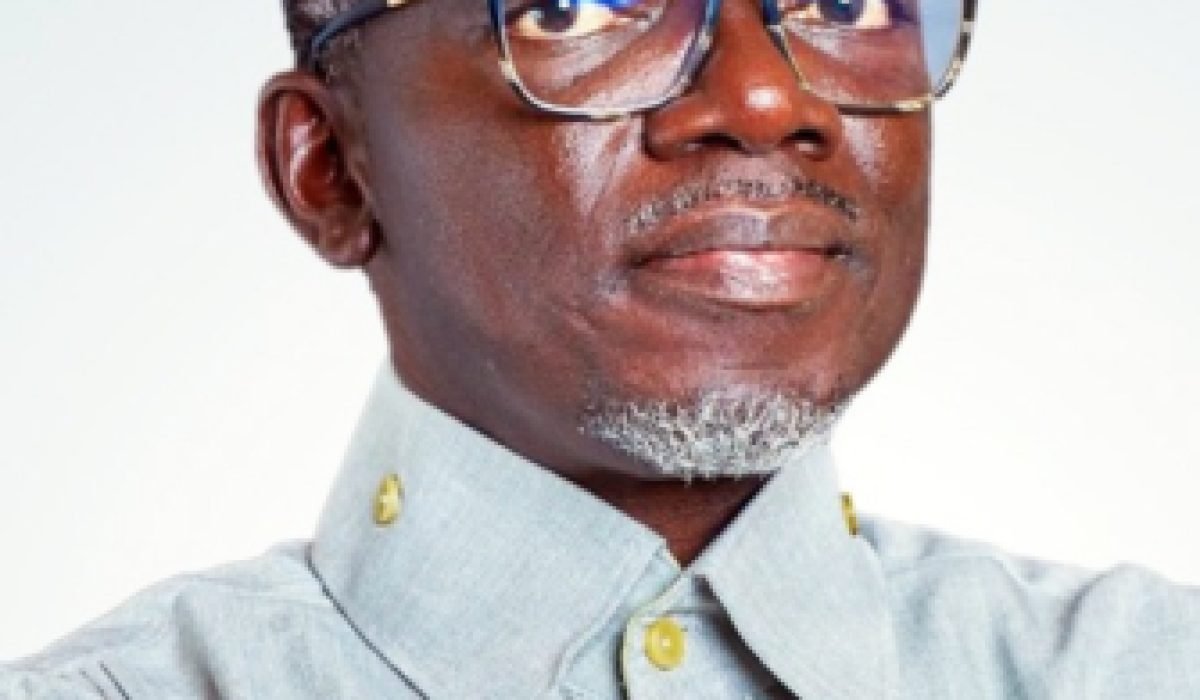
Dr David King Boison is a Maritime and Port Expert, pioneering AI strategist, educator, and creator of the Visionary Prompt Framework (VPF), driving Africa’s transformation in the Fourth and Fifth Industrial Revolutions. As head of the AiAfrica Training Project, he has trained over 2.3 million people across 15 countries toward his target of 11 million by 2028.
Image Source: MYJOYONLINE
New Posts


Advertisement
Trending