China Boosts Support for Ghana's Sustainable Mining Efforts
China has reiterated its commitment to supporting Ghana in developing a sustainable and responsible mining sector, pledging continued collaboration and knowledge sharing.
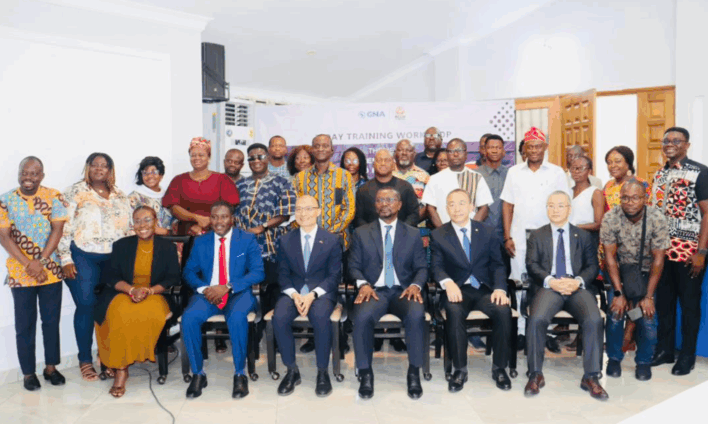
The pledge was made by Chinese Ambassador to Ghana, Mr. Tong Defa, at the opening of a three-day workshop for editors and reporters in Peduase. He stated China is prepared to deepen its partnership with Ghana to promote environmentally friendly mining practices.
“We are ready to work with Ghana to promote green and sustainable development in the mining industry,” Ambassador Tong said, adding that China consistently urges its companies operating in Ghana to adhere to all local laws and regulations.
According to the Ambassador, China aims to assist Ghana in enhancing its mining technology, upgrading equipment, controlling operational costs, boosting revenue, and increasing the value of its mineral resources through technology transfer and expertise.
Mr. Tong highlighted a recent China-Ghana Mining Cooperation Roundtable, hosted by the Chinese Embassy, which brought together key stakeholders from both nations to foster greater engagement on sustainable mining practices.
He emphasized the significant role Chinese mining firms play in Ghana’s job creation, community development, and environmental stewardship. He specifically cited the Cardinal Namdini Gold Mine, operated by Shandong Gold in the Upper East Region, and the Wassa Gold Mine, run by Chifeng Gold in the Western Region, as examples of companies prioritizing sustainable operations.
Shandong Gold, for instance, employs approximately 1,600 contract workers, 94 per cent of whom are Ghanaian nationals, and actively engages with the communities where it operates. The company has invested around US$2 million in local health, education, sanitation, and infrastructure projects, including the construction of a 25-kilometre road connecting over 10 communities.
Chifeng Gold has also made substantial investments via the Golden Star Community Development Fund, allocating approximately US$4.5 million to build community centres, schools, clinics, provide access to potable water, construct roads and other vital infrastructure.
Furthermore, the company is partnering with local farmers to reclaim mined lands for agricultural purposes, having already established the Golden Star Oil Palm Plantations Limited. Plans are underway to construct a medium-sized oil palm processing plant capable of processing 10 tonnes of fresh fruit bunches per hour.
“This would further increase farmers’ income, and provide more employment opportunities for local residents,” Ambassador Tong explained.
China, the Ambassador stated, remains committed to expanding cooperation with Ghana across key sectors including mining, energy, infrastructure, agriculture, and fisheries to support the nation’s overall development. “China is eager to expand collaboration in mining, energy, infrastructure construction, agriculture, and fisheries with Ghana, to transform Ghana’s natural resource advantages into drivers of development,” he said.
He noted that President John Dramani Mahama had previously expressed his gratitude for China’s support through initiatives like the Forum on China–Africa Cooperation (FOCAC) and the Belt and Road Initiative, and that future cooperation will be aligned with China’s long-term development framework.
Ambassador Tong concluded by urging Ghanaian journalists to adopt a balanced and comprehensive approach when reporting on mining activities involving Chinese nationals, emphasizing that the actions of a few should not diminish the positive contributions of law-abiding companies. The workshop, organized by the Ghana News Agency (GNA) in collaboration with the Association of China-Ghana Mining, aimed to enhance the capacity of editors and reporters to cover mining issues responsibly and in-depth, amidst ongoing efforts to address illegal mining and promote best practices.
Image Source: MYJOYONLINE