GIPC Boss Highlights Opportunities in Infrastructure, Agric, and Value Chain Expansion
Government has outlined infrastructure development, agriculture, and value-chain expansion as key economic priorities for 2026, urging investors to position themselves for emerging opportunities.
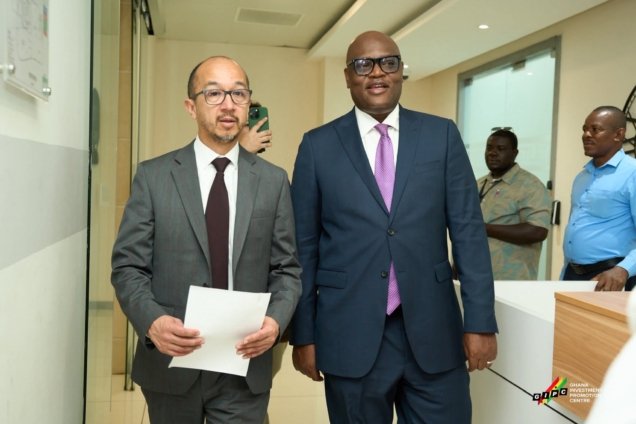
The Ghana Investment Promotion Centre (GIPC) CEO, Simon Madjie, made this known during an engagement with a Colombian business delegation in Accra, on the sidelines of the Colombian Vice President, Francia Márquez’s state visit.
Mr. Madjie stated that the recent stabilization of the Ghanaian economy provides a robust foundation for a focused growth agenda, directly addressing long-standing structural challenges. He specifically mentioned plans to invest nearly GH₵3 billion in the rehabilitation and construction of highways and road networks nationwide.
“The scale of these planned road projects presents significant opportunities for construction firms and related industries, alongside dramatically improved connectivity to bolster economic activity across the country,” he explained.
He also highlighted the 24-Hour Economy and Accelerated Export Development (24H+) policy, clarifying that it’s a comprehensive development programme, designed to bolster domestic production and self-sufficiency, rather than simply extending business hours.
“Currently, Ghana spends approximately GH₵3 billion annually on food imports. Government interventions are, therefore, geared not only towards increasing food production but also reinforcing the entire agricultural value chain—from farm-level activity to processing and distribution,” Mr. Madjie added.
The Volta Economic Corridor programme, a core component of the 24-hour economy initiative, was also discussed. It aims to develop roughly two million hectares for year-round agricultural production, leveraging the Volta River’s water resources for extensive irrigation and all-season farming.
Plans are also underway to cultivate some 200,000 hectares specifically for cocoa farming within the corridor, in a bid to significantly boost production and export revenue, Mr. Madjie disclosed.
He appealed to both local and foreign investors to actively collaborate with the government in capitalizing on the opportunities presented by the infrastructure projects and the 24-hour economy.
Leading the Colombian delegation, Deputy Minister of Commerce, Mr. Tito Rufino Yepes, reaffirmed Colombia’s commitment to strengthening relations with Ghana. He detailed the Colombia Strategy for Africa, a framework focused on broadening diplomatic, economic, and cultural ties.
Mr Yepes emphasized the importance of South–South cooperation, referencing shared historical connections, specifically with Afro-descendant communities, and Colombia’s willingness to share its expertise in development and peacebuilding to foster trade and strategic partnerships with Ghana and other African nations.
Image Source: MYJOYONLINE