Nationwide Premix Accountability Drive Launches in 2026
The National Premix Fuel Secretariat will extend its Premix Accountability Series to all landing beaches nationwide by early 2026, following a successful pilot programme in the Western Region.
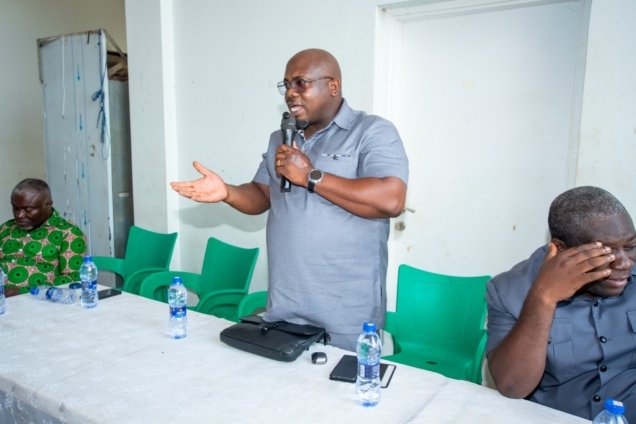
Administrator Ebow Mensah revealed that engagements in Sekondi, New Takoradi and Abuesi were merely the beginning, representing a small fraction of the over 300 landing beaches currently supplied with premix fuel throughout Ghana.
“This is not the end of the accountability series,” Mr Mensah stated. “We have only done three communities. Come early 2026, we are going to ensure that all metropolitan and municipal chief executives are notified so that this happens across the country.”
He emphasised that Metropolitan, Municipal and District Chief Executives (MMDCEs) have a legal mandate to supervise landing beach committees and should actively enforce transparency in their operations. A firm warning was issued to committees operating between 2017 and 2024 who have not accounted for funds used.
“For those that have not engaged their communities or accounted for how the community funds were used, we will deal with them,” Mr Mensah cautioned, adding that chief fishermen will be empowered to demand accountability at the local level.
The Secretariat acknowledged existing challenges, including occasional premix fuel shortages – often linked to financial issues faced by bulk distribution companies – and inconsistencies in record-keeping at some beaches. To rectify this, the Premix Fuel Returns Booklet has been introduced to standardise the documentation of fuel receipts, sales, profits and the 53% allocated for community development.
“This is basic arithmetic,” Mr Mensah explained. “We believe everyone can do it with the right tools. That is why we have introduced a single booklet and logbook system to track all transactions.”
He expressed optimism that consistent accounting and public reporting would enhance confidence in the premix fuel distribution system and ensure its long-term sustainability.
The pilot programme marked the first time many fisherfolk had access to detailed financial information. Kwame Essel, a canoe owner in Sekondi, shared, “I have been fishing here for more than 20 years, but this is the first time I am seeing them show us the books like this. When they mentioned the amounts and showed where the money is kept, it gave us some confidence.”
Under Legislative Instrument (L.I.) 2233, 53% of premix fuel margins are earmarked for community projects. However, many communities have previously lacked clear information regarding the funds accrued and their utilisation.
Esi Armah, a fishmonger in New Takoradi, highlighted the importance of the initiative: “Before now, when we asked about the premix money, people would say, ‘It has been used.’ Used for what? We didn’t know. This time, they told us how much came in and where the money is. That is what we want.”
Several participants noted an immediate reduction in tension as a result of the transparency demonstrated. Yaw Mensah, a crew member from Abuesi, said, “When people don’t know, they suspect everything. Today, when they showed the bank statement, the shouting reduced. Even those who were angry became calm.”
The Sekondi landing beach committee reported having raised approximately GH₵126,000 for community development in the last ten months, figures which surprised many. “I didn’t know the money could reach that level,” remarked Mary Koomson, a smoked fish vendor. “If we manage it well, we can do something meaningful for the whole place.”
While welcomed, the exercise also sparked expectations for tangible projects. Kofi Blay, a canoe owner, stated, “We have seen the money now. The next thing is to sit down as a community and agree on what to use it for. If we see toilets, lights, or repairs at the beach, everyone will support the system.”
A recurring theme was the need for consistent reporting. Abdul Rahman, a fisherman at New Takoradi, stressed, “If they do this only once, it will not help. They should come every quarter or every year and tell us the same thing. That is how trust will stay.”
The National Premix Fuel Secretariat officials indicated the positive reactions from fishermen underscore the value of the accountability series. Administrator Mensah stated that transparency fosters a sense of collective responsibility.
“When communities can see the figures and ask questions, the system becomes stronger,” he said. “That is how premix moves from suspicion to shared responsibility.”
As the sun set, discussion continued amongst the fisherfolk regarding potential community projects and the use of the funds, signifying a newfound sense of ownership and hope for the future of the premix fuel system.
“As long as they keep doing this,” Kwame Essel said quietly, “we will also protect the system. Because now, it feels like it truly belongs to us.”
Image Source: MYJOYONLINE