Kwaku Azar Warns of Chaos in Kpandai By-Election
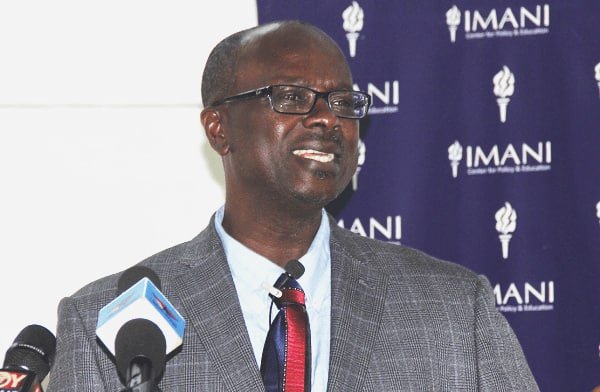
Legal scholar and governance advocate, Professor Stephen Kweku Asare, has expressed serious concerns regarding the Electoral Commission’s (EC) decision to hold a by-election in Kpandai on December 30, 2025, deeming the move premature and constitutionally flawed.
Professor Asare, popularly known as Kwaku Azar, cautioned in a detailed Facebook post that proceeding with the by-election before the Court of Appeal delivers its ruling on the validity of the incumbent MP’s election could lead to “avoidable chaos and competing mandates.”
He painted a scenario where a new MP could be elected only to have the Court of Appeal, scheduled to rule on January 3, 2026, overturn the High Court’s decision that initially declared the seat vacant. “Imagine that the poll is held and a new candidate emerges victorious,” he wrote. “Now imagine that, just four days later, the Court of Appeal reverses the High Court and affirms that the incumbent was validly elected. What would we be left with?”
According to Professor Asare, such a situation would result in Parliament recognizing two individuals as the rightful MP – the one elected in the 2024 general election, whose seat was never legally vacant, and the one elected in the unnecessary by-election.
“This would distort constitutional order and place Parliament in an impossible position,” he warned. He emphasized that Ghana’s Constitution, specifically Article 99, mandates the completion of the entire judicial process, including appeals, before a parliamentary seat can be declared vacant.
“A parliamentary seat becomes vacant only after the full judicial process has run its course. The Clerk and the EC must respect this safeguard, not override it,” Professor Asare stated.
He dismissed arguments that the EC’s decision is justified by the need to avoid delays, asserting that “the cure for delay is procedural reform – not institutional shortcuts that manufacture constitutional crises.”
Professor Asare also refuted claims that the Kpandai by-election mirrors the precedent set in the Assin North case. “This is false,” he stated, explaining that the Assin North by-election was prompted by a Supreme Court order, from which there was no further appeal, unlike the current situation which stems from an ongoing appeal at the Court of Appeal.
He described the Supreme Court’s intervention in the Assin North case as “constitutionally unsound” given the pending appeal at the High Court. He questioned the urgency behind scheduling the Kpandai by-election so close to the Court of Appeal’s ruling.
“There is no constitutional justification for it,” he said. “Until the Article 99 appeal process has concluded, the High Court’s judgment is provisional, not final, and cannot trigger a by-election.”
Professor Asare warned that proceeding prematurely could undermine the legitimacy of the process, invite further legal challenges, and create national confusion. “The cost of waiting is minimal,” he argued. “The cost of acting prematurely is national confusion, competing mandates, and avoidable constitutional disorder.”
He urged state institutions to prioritize upholding constitutional order over speed. “When the law has already designed a safe, orderly pathway, rushing to cut corners is not efficiency – it is recklessness,” he said. “Our institutions must resist the temptation to do corner fast at the expense of the Constitution. We deserve order, not expediency.”
Image Source: MYJOYONLINE