Queiroz hails Asare's exploits against England
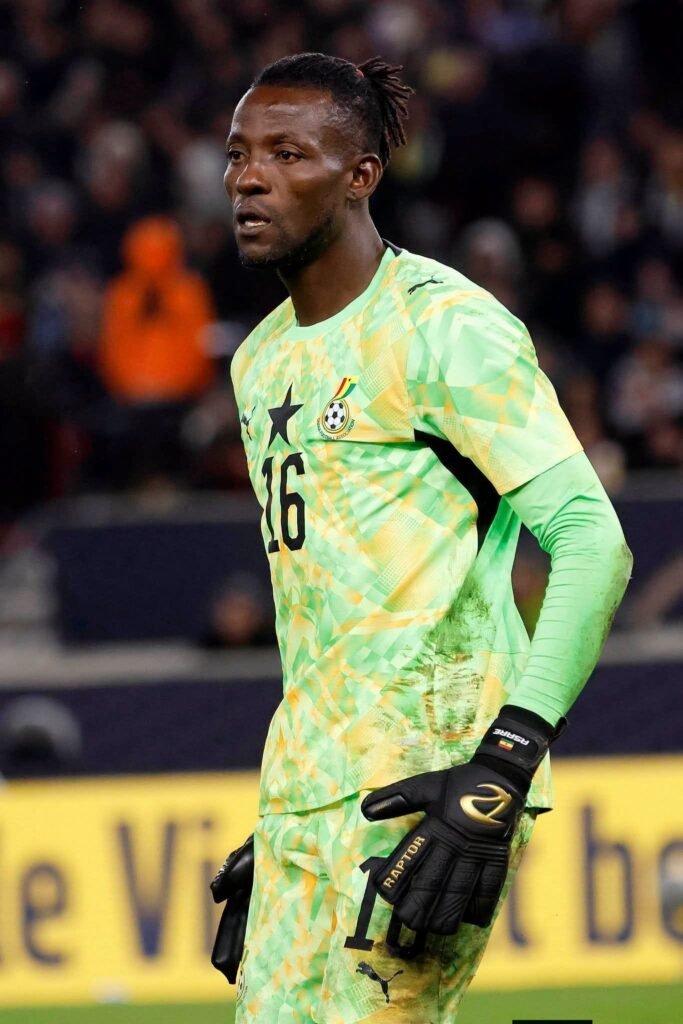
Ghana’s hard-fought goalless draw against England at the Boston Stadium carries significance that extends well beyond the single point earned in World Cup qualifying, revealing both the progress made under coach Carlos Queiroz and the foundational principles guiding his approach to building a competitive national team.
The result itself represents a notable achievement. England, perennial contenders and recent semifinalists in major tournaments, arrived as clear favorites boasting world-class talent across the pitch. For Ghana to emerge from the encounter with a clean sheet against such opposition speaks to the defensive organization and collective commitment instilled by the Portuguese coach, whose methods continue to shape the Black Stars’ identity on the international stage.
Central to this defensive resilience was the performance of goalkeeper Benjamin Asare, whose commanding presence between the posts provided the last line of defense that kept England’s potent attack at bay. Asare’s contribution extended beyond mere shot-stopping to encompass organizational leadership, communication with his defense, and the courage to make decisive interventions when called upon – qualities that did not go unnoticed by his coach despite Queiroz’s characteristic reluctance to spotlight individual performances.
“Usually, I don’t like to talk. Never, never. I avoid talking about individual players,” Queiroz explained in the post-match press conference, revealing a coaching philosophy that prioritizes collective effort over individual acclaim. “But I think he deserves applause,” he added, acknowledging the goalkeeper’s standout performance while immediately contextualizing it within the team framework.
This approach reflects Queiroz’s broader methodology, which he articulated clearly: “He was brilliant because he’s in a specific position in the team and this is only due to the quality of the player, first of all, and the work that we did with all of them.” The statement reveals a coaching philosophy that sees individual excellence as emerging from systematic team preparation rather than isolated talent – a perspective that places the development of squad depth and collective understanding at the forefront of team building.
Expanding on his approach, Queiroz emphasized the comprehensive nature of his preparation strategy: “So, since the beginning, and my approach, it is work with all players and make them ready to perform. I know and I learned in this business that we can win a couple of games with 11 players, but we can never succeed if we don’t have a team ready to fulfill all the obligations.” This insight reveals a long-term vision focused not on tactical fixes for individual matches but on building squad depth capable of maintaining performance levels despite injuries, suspensions, or form fluctuations – a critical consideration for navigating the grueling demands of international competition.
The defensive solidarity displayed against England was no accident but the culmination of this systematic approach. Ghana’s ability to frustrate one of the tournament favorites stemmed from collective defensive organization rather than isolated brilliance, with Asare’s interventions representing the visible manifestation of a team-wide commitment to defensive principles. As Queiroz noted, “Ghana’s disciplined defensive performance frustrated England, with Asare’s interventions helping Ghana maintain a clean sheet against one of the tournament favourites.”
Perhaps most revealing was the coach’s emphasis on the psychological and cultural foundations of team performance: “And special, which is not easy when you play one game that demands 90 minutes of full concentration, resilience, fighting, and determination.” This recognition of the mental and emotional components of elite performance speaks to an understanding that technical and tactical preparation must be complemented by psychological readiness and team cohesion.
Queiroz’s vision extends beyond tactical formations to encompass team culture: “When 11 men go inside one pitch and they share a common dream, things can happen and all my players, they play for each other. They don’t play for the scoreboard. They don’t play against the watch. They don’t play against the history. They just play for each other, to the teammate that was side by side with them.” This philosophy creates an environment where individual sacrifices for the collective good become the norm rather than the exception, fostering the resilience and unity necessary to compete with more highly touted opponents.
The result against England leaves Ghana well-positioned in Group L, level on points with England and looking ahead to a pivotal encounter against Croatia that could determine World Cup qualification prospects. More importantly, it validates an approach to team building that prioritizes systematic preparation, collective responsibility, and cultural cohesion – elements that may prove as valuable as any tactical innovation in Ghana’s quest to reestablish itself as a consistent force in international football.
Image Source: GHANAIAN TIMES