NRGI warns corruption risks threaten Ghana's lithium benefits
Ghana’s emerging lithium industry stands at a juncture where the promise of economic transformation must be weighed against governance risks that have undermined other extractive sectors. The Natural Resource Governance Institute (NRGI) warns that without robust oversight and informed public scrutiny, Ghana may fail to translate its lithium wealth into lasting benefits for citizens, potentially repeating patterns seen in other resource-rich nations where opaque processes and elite capture have undermined development potential.
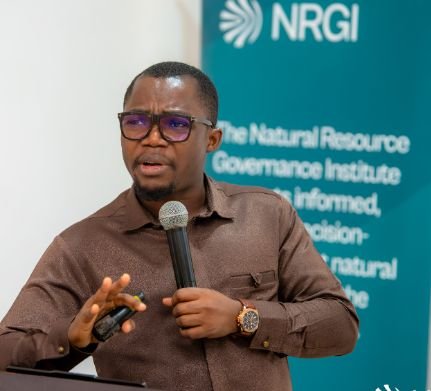
This warning came during a one-day capacity-building workshop in Accra organized by NRGI for journalists and civil society organizations focused on tracking corruption risks across Ghana’s lithium value chain. Held under the theme “Addressing Corruption Risks in Ghana’s Lithium Value Chain: Governance, Transparency, and Accountability,” the workshop aimed to equip participants with tools to monitor developments in a sector that could significantly shape the nation’s economic trajectory.
At the heart of Ghana’s lithium aspirations lies the Ewoyaa Lithium Project in the Central Region, positioned to supply the rapidly expanding global electric vehicle battery market. As the world accelerates its transition to clean energy technologies, demand for lithium-ion batteries has surged, creating both opportunity and challenge for resource-rich developing nations seeking to leverage their mineral endowments for sustainable development.
Patrick Kwabena Stephenson, Country Manager of NRGI Ghana, highlighted recent assessments identifying significant governance risks throughout the lithium value chain. These include opaque decision-making processes lacking public scrutiny, excessive political discretion in licensing and contracting, inadequate disclosure practices obscuring beneficial ownership and financial arrangements, transfer pricing risks that could diminish state revenues, and non-transparent offtake arrangements under vertically integrated corporate structures that may limit competitive pricing and market access.
Of particular concern is the reported transfer of the Ewoyaa Lithium Project to Zhejiang Huayou Cobalt, a major Chinese cobalt and lithium producer. While such partnerships can bring essential financing, technical expertise, and access to international markets, they also raise critical questions about valuation methodologies, transparency in negotiation processes, and mechanisms to ensure a fair share of the project’s economic benefits remains within Ghana.
Stephenson’s warning carries particular weight given Ghana’s experience with other extractive sectors: “Without strong oversight and informed public scrutiny, Ghana risks repeating patterns seen in other extractive sectors, where unclear processes, weak enforcement and elite influence have limited the benefits accruing to citizens.” This reflects a widespread pattern across Africa where mineral wealth has frequently failed to translate into broad-based development due to governance shortcomings rather than lack of resource potential.
The NRGI recommendations emphasize a proactive approach to governance that begins well before extraction starts. Key among these is engaging affected communities early in the process to ensure those most directly impacted by mining operations have a voice in shaping projects affecting their lands, livelihoods, and communities. This pre-emptive engagement represents not just best practice in social responsibility but a fundamental component of obtaining the social license to operate essential for long-term project viability.
Monitoring recommendations extend throughout the project lifecycle, with specific attention to tracking project transfer arrangements for transparency and fair valuation, monitoring equity commitments by investors to ensure they are honored, and tracking royalty payments and revenue flows once production begins to verify that the state receives its due share of benefits. For civil society organizations, the focus includes community mobilization, establishment of independent environmental baseline data collection, and ensuring community perspectives are integrated into parliamentary processes and policy reviews shaping the regulatory framework.
The emphasis on transparency and accountability reflects a growing recognition that technical expertise and financial investment alone are insufficient to ensure that mineral wealth contributes to sustainable development. Rather, the quality of governance surrounding extraction determines whether resources become a blessing or a curse—a lesson learned painfully by numerous nations across the globe.
For Ghana, the lithium opportunity presents a chance to apply lessons learned from previous extractive experiences and establish a new model for resource governance. This requires strengthening institutional capacities within regulatory bodies, implementing robust transparency mechanisms such as contract disclosure and beneficial ownership registries, and fostering an environment where civil society and media can operate freely to scrutinize developments.
The stakes extend beyond immediate economic gains to encompass broader developmental goals. Successfully managed lithium revenues could fund critical investments in education, healthcare, and infrastructure, while contributing to economic diversification efforts. Conversely, poor management could exacerbate inequality, fuel social conflict, and leave behind environmental degradation long after the mines have closed.
As global demand for lithium continues to grow driven by the electric vehicle revolution and renewable energy storage needs, Ghana finds itself positioned at the intersection of technological transition and resource governance. The choices made in the coming years regarding how to develop and manage this resource will not only determine the economic benefits derived from lithium but will also serve as a testament to the nation’s commitment to building a resource governance model that prioritizes equitable, sustainable, and transparent development.
Image Source: GHANA BUSINESS NEWS