Asantehene's Challenge: Engineering-Led Solutions Key to Solving Ghana's Flooding Crisis
Asantehene’s Challenge: Engineering Solutions Essential for Ghana’s Flood Resilience
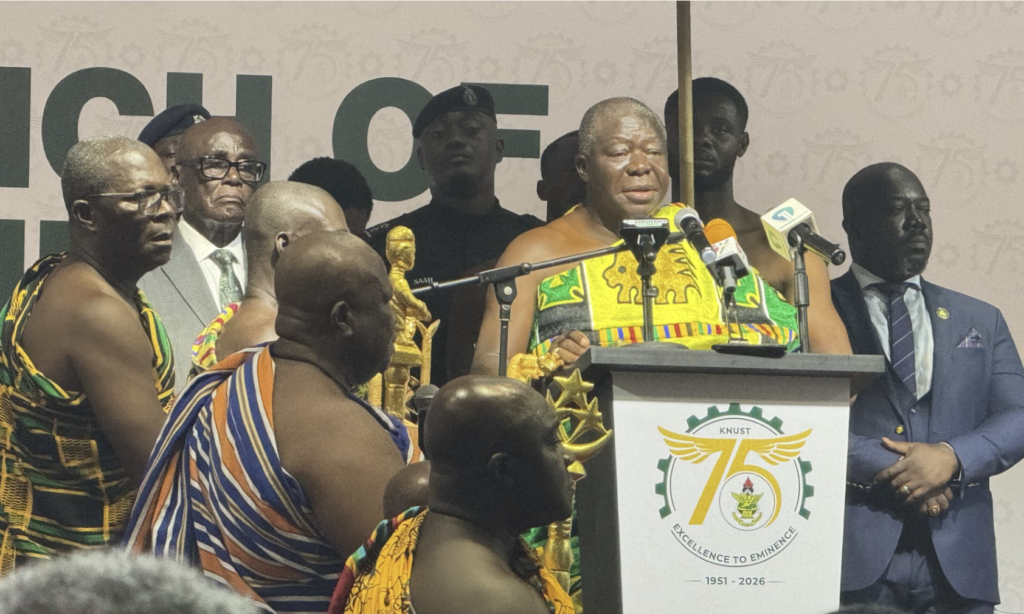
The Asantehene Otumfuo Osei Tutu II’s recent call for the Kwame Nkrumah University of Science and Technology (KNUST) to lead in developing lasting solutions to Ghana’s flooding crisis represents a timely recognition of engineering’s critical role in climate adaptation. Speaking at KNUST’s 75th anniversary launch, the monarch emphasized that technical expertise must drive efforts to address a problem that increasingly threatens lives, livelihoods, and infrastructure across the nation.
His appeal comes amid growing evidence that Ghana’s flooding challenges are intensifying. Recent incidents, including the devastating flood in Wassa Akropong that swept away two individuals while a third was rescued, demonstrate the immediate human cost of inadequate drainage and stormwater management. Similarly, ongoing initiatives like the Zoomlion and NADMO anti-flood campaign in Greater Accra reveal the scale of coordinated effort required to mitigate urban flood risks through waste management and public awareness.
The Asantehene’s diagnosis of the problem aligns with expert assessments: poor waste management practices and insufficient public education on proper disposal significantly contribute to flooding by clogging drainage systems and waterways. When plastic waste and other debris block gutters and culverts, rainwater has nowhere to go but into homes, businesses, and streets—a scenario played out annually in communities nationwide.
What distinguishes the Asantehene’s approach is his insistence that solutions must come from Ghana’s own engineering institutions rather than imported expertise. By specifically charging KNUST’s College of Engineering—a institution he praised for its “ability to adapt, innovate and lead in a rapidly changing world”—he expressed confidence in local capacity to develop context-appropriate responses. This represents a vote of confidence in Ghana’s technical education system and its potential to generate homegrown solutions to local challenges.
The monarch’s request for “practical, location-specific guidance on waste management and disposal sites” reflects an understanding that effective flood mitigation requires granular, community-based knowledge. Engineers must not only design drainage infrastructure but also understand local geography, soil conditions, rainfall patterns, and community behaviors to create systems that function effectively in specific settings.
His reminder that engineers should “be able to tell us where to dump what and where” speaks to the need for integrated waste management strategies that complement flood control efforts. Proper waste handling reduces the likelihood of drainage blockages while creating potential economic opportunities through recycling and composting initiatives.
The Asantehene’s praise for KNUST’s long-term vision—encompassing research advancement, digital transformation, global partnerships, and strengthened national development contributions—highlights the multidimensional approach needed to tackle complex environmental challenges. Modern flood resilience requires not just physical infrastructure but also early warning systems, predictive modeling, community education, and adaptive governance frameworks.
His challenge to the university to “continue addressing pressing national issues through research and innovation, particularly in areas such as infrastructure development, environmental sustainability, and technological advancement” sets a clear agenda for applied research that bridges theory and practice. This aligns with growing global recognition that solving climate adaptation demands interdisciplinary approaches combining civil engineering, environmental science, urban planning, and social sciences.
The monarch’s call for continued investment in infrastructure, research capacity, digital transformation, and innovation culture echoes international best practices in climate adaptation. Nations that have successfully reduced flood vulnerability typically combine structural solutions (like improved drainage and flood barriers) with non-structural measures (such as land-use planning, early warning systems, and community preparedness programs).
Perhaps most significantly, the Asantehene framed this as an intergenerational responsibility: “As we celebrate 75 years of achievement, we must also prepare deliberately for the future.” This perspective recognizes that today’s infrastructure and environmental decisions will shape Ghana’s resilience to flooding for decades to come. The students KNUST educates today will be the engineers designing tomorrow’s flood defenses, the policymakers implementing water management strategies, and the researchers developing new approaches to hydrological challenges.
His encouragement for students to “pursue excellence with integrity” reminds us that technical solutions alone are insufficient without ethical leadership. Engineers tasked with public safety infrastructure must prioritize community welfare over expediency or corruption—a principle particularly relevant in contexts where contract awards and project implementation have historically suffered from governance challenges.
The appeal to alumni, government, industry, and development partners to “deepen their support for the University’s next phase of growth” acknowledges that solving complex challenges like flooding requires collective effort. No single institution can address this issue alone; success depends on collaboration between academia, government, private sector, and civil society.
As Ghana confronts increasing climate variability and urbanization pressures, the Asantehene’s message is clear: engineering excellence, grounded in local context and directed toward public welfare, offers one of the most promising paths toward reducing flood vulnerability and building more resilient communities nationwide.
Image Source: MYJOYONLINE