Gov't moves Republic holiday to Friday, July 3
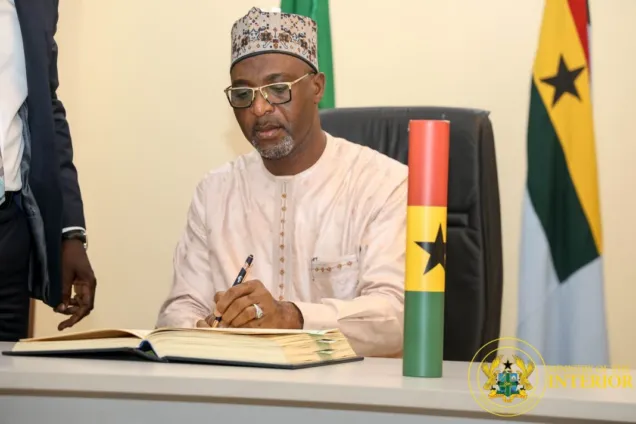
In a routine administrative adjustment that will affect workers and businesses nationwide, the Ghanaian government has shifted the observance of Republic Day to create a long weekend at the start of July.
The Ministry for the Interior announced that Friday, July 3, 2026, will be observed as a statutory public Republic Day holiday, even though the actual anniversary of Ghana’s transition to a republic falls on Wednesday, July 1, 2026.
Such adjustments to holiday observances are not unprecedented in Ghana’s administrative practice. Earlier this year, the government similarly designated specific dates for commemorations like the International Day against Drug Abuse and Illicit Trafficking, demonstrating a pattern of adjusting observance dates to optimize public participation while maintaining the substance of national commemorations.
According to an official statement, President Nana Addo Dankwa Akufo-Addo issued an Executive Instrument (E.I.) designating July 3 as the day for nationwide observance, exercising authority granted under Section 2 of the Public Holidays and Commemorative Days Act, 2001 (Act 601), as amended.
The government’s notice advises the public to observe Friday, July 3, 2026, as a public holiday throughout the country. This adjustment creates a four-day weekend from Thursday, July 2 through Sunday, July 5, assuming the standard Friday-Saturday weekend structure.
Such date adjustments for public holidays are not uncommon in Ghana, often made to minimize disruption to economic activity while still honoring national commemorations. By moving the observance to a Friday, the government creates an opportunity for extended leisure time or travel without requiring mid-week shutdowns that can be particularly disruptive to businesses and essential services.
Republic Day marks the anniversary of Ghana’s declaration as a republic on July 1, 1960, when the country severed its final constitutional ties to the British monarchy and established Kwame Nkrumah as its first president. The holiday typically features official ceremonies, cultural performances, and reflections on Ghana’s republican journey.
While some may lament the separation of the holiday from its actual historical date, the practical benefits of consolidated holiday periods often outweigh concerns about chronological precision. The adjustment allows citizens to fully disengage from work obligations for an extended period, potentially boosting domestic tourism and providing valuable rest time.
For businesses, the change-of-week observance typical features official ceremonies, cultural performances, and reflections on Ghana’s republican journey.
While some may lament the separation of the holiday from its actual historical date, the practical benefits of consolidated holiday periods often outweigh concerns about chronological precision. The adjustment allows citizens to fully disengage from work obligations for an extended period, potentially boosting domestic tourism and providing valuable rest time.
For businesses, the change means adjusting payroll and operational schedules for what will effectively be a four-day weekend. Retailers, hospitality providers, and entertainment venues may see increased demand during the extended period, while others will need to adjust production schedules accordingly.
The government routinely evaluates the timing of public holidays to balance cultural significance with economic considerations. Similar adjustments have been made in previous years for other national holidays, reflecting an ongoing effort to optimize the national calendar for both commemorative and practical purposes.
As with any change to the holiday schedule, citizens and businesses are advised to verify the updated dates in their planning for July 2026. Official reminders will likely be issued closer to the date to ensure widespread awareness of the adjusted observance.