KNUST Pro Vice-Chancellor Urges Action on Air Pollution Deaths
Africa is facing an urgent air quality crisis, with the continent recording over one million premature deaths annually due to air pollution, the Pro Vice-Chancellor of the Kwame Nkrumah University of Science and Technology (KNUST), Professor David Asamoah, has warned.
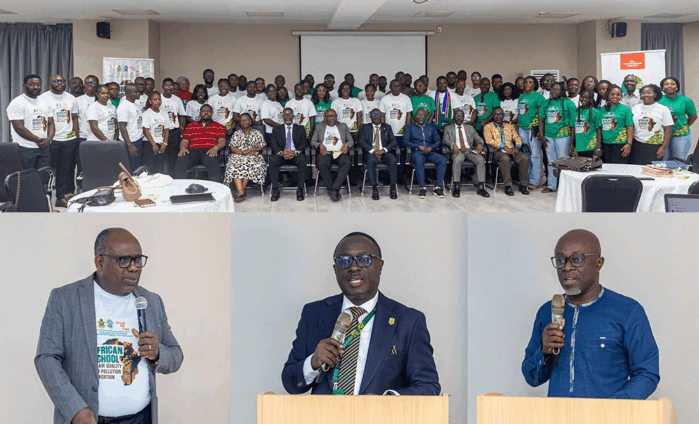
Speaking at the opening of the third African School on Air Quality and Pollution Prevention, Professor Asamoah, representing the Vice-Chancellor, emphasized that “the air we breathe is under siege.”
According to the State of Global Air 2025 report, more than 32,000 people in Ghana alone died in 2023 from exposure to polluted air. The same report, through the Air Quality Life Index (AQLI) 2025, indicates that air pollution reduces the average Ghanaian’s life expectancy by almost nine months.
The two-week training programme, funded by the Clean Air Fund, attracted over 1,000 applications from 47 countries, with 70 professionals selected to participate. These participants represent diverse fields including fire services, environmental agencies, pharmacy, planning, journalism, and public health.
Professor Asamoah lauded the increasing involvement of young Africans in developing solutions to combat air pollution. “Across our universities and research institutions, young scientists are developing low-cost air monitoring devices, designing clean cookstoves, and advocating for climate-smart cities,” he noted.
He called on institutions to increase investment in research, policy engagement, and community outreach. “Let us transform knowledge into leadership and leadership into action. Let us ensure that the next generation inherits a cleaner, safer and healthier continent,” he urged.
Professor Leonard Amekudzi, the Principal Investigator for the project, highlighted the growing urgency of air quality research due to population growth and increased human activity. He explained that the School, which began in 2018, has become a key training initiative for producing “clean air champions” across the continent.
“Air quality is health-related, and health is life-related. We must talk about it, empower people with knowledge, and develop champions who will carry the message across Africa. We do not want to only publish research, we want to make a real impact on the continent,” Professor Amekudzi said.
Desmond Appiah, Ghana Clean Air Fund Lead, described air pollution as a “silent killer” and encouraged participants to implement their learnings in their respective countries. “We don’t want you to go back and end the story. We want to see clean-air initiatives, advocacy, and action wherever you are,” he stated.
Mr. Appiah further urged participants to collaborate with local leaders, promote waste segregation, and actively reduce sources of pollution like open burning within their communities.
Image Source: MYJOYONLINE