Goldbod Commits GH¢35 Million to Reclaim Tano Nimiri Forest From Illegal Mining Devastation
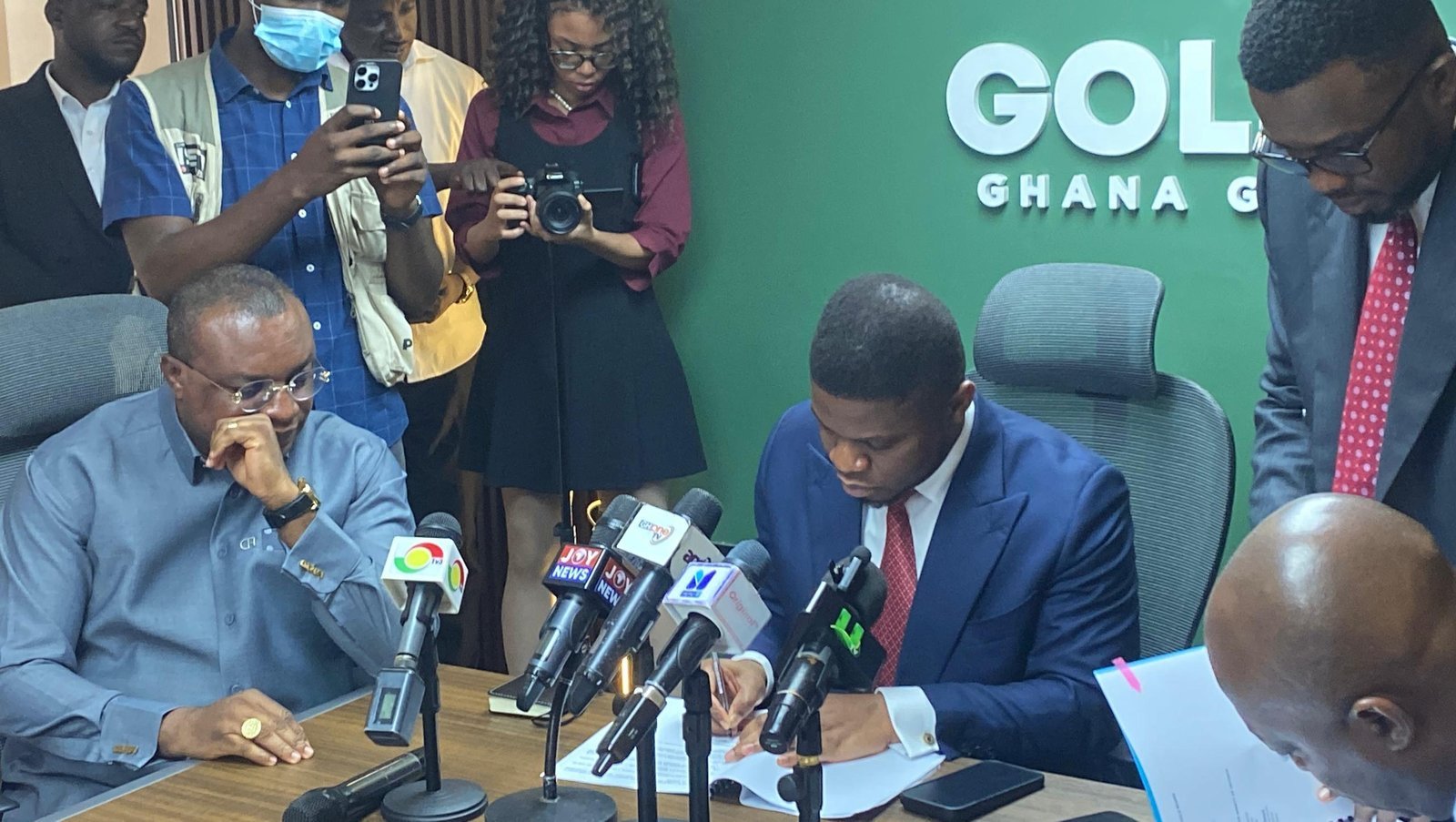
The Ghana Gold Board has pledged GH¢35 million to reclaim and restore sections of the Tano Nimiri Forest Reserve ravaged by illegal mining, marking the first major project under its newly established National Reclamation and Environmental Restoration Programme.
The initiative, announced at a signing ceremony in Accra on Tuesday, will see the Ghana Army’s Engineering Regiment execute the physical restoration work in partnership with the Forestry Commission. The first phase targets the rehabilitation of 50 hectares out of more than 100 hectares of forest land that has been devastated by years of unregulated mining activity.
Sammy Gyamfi, Chief Executive Officer of the Goldbod, described the project as a turning point in the country’s approach to environmental damage caused by the extractive sector. He said the Tano Nimiri Forest Reserve was selected after field visits revealed the scale of destruction wrought by illegal miners operating within its boundaries.
The project arrives at a critical juncture for Ghana’s forest reserves. A separate court case currently underway has heard testimony alleging that Ashanti Regional NPP Chairman Bernard Antwi Boasiako, popularly known as Chairman Wontumi, directed mining activities in the very same Tano Nimiri Forest Reserve, underscoring the political dimensions of the environmental crisis the Goldbod now seeks to address.
Ernest Brogya Genfi, Deputy Minister for Defence, described the reclamation effort as a crucial intervention that simultaneously prevents further environmental degradation and begins the restoration of land already destroyed. He said the involvement of the Army’s Engineering Regiment reflects the seriousness with which the government views the task.
Dr. Hugh C.A. Brown, Chief Executive Officer of the Forestry Commission, commended the Goldbod for the partnership and stressed the importance of restoring degraded sections of the reserve. He noted that reclaiming the initial 50 hectares would represent an important step towards restoring ecological balance, protecting biodiversity and preserving critical forest ecosystems that serve surrounding communities.
The broader significance of the programme extends beyond the Tano Nimiri Forest. The Goldbod has signalled that this project is the beginning of a sustained, collaborative national effort to restore degraded lands across Ghana. Officials have framed the initiative as proof that economic development driven by gold-related activities can coexist with environmental sustainability, a claim that will be tested as the project progresses.
Ghana’s illegal mining crisis, commonly referred to as galamsey, has destroyed tens of thousands of hectares of forest and contaminated major water bodies over the past two decades. Previous reclamation efforts have been criticised for being underfunded and poorly coordinated. The Goldbod’s GH¢35 million commitment, backed by military engineering capacity, represents a more structured approach, though environmental groups will be watching closely to see whether the funding translates into measurable ecological recovery.
Image Source: STARR FM