Heavy Rains Trigger Flooding and Gridlock on Weija SCC-Atala Stretch of Accra-Takoradi Highway
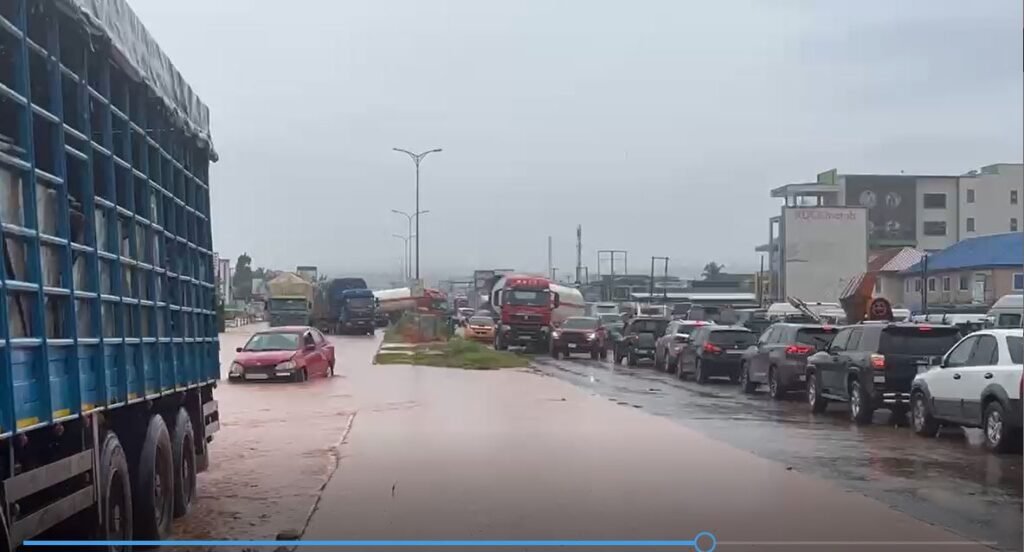
Heavy rains that fell in the early hours of Tuesday have once again triggered flooding and silt deposition along the Accra–Takoradi Highway, particularly at the Weija SCC–Atala stretch, causing severe traffic congestion and stranding commuters for hours on what is normally a five-minute drive.
The flooding submerged sections of the highway and deposited thick layers of silt across the roadway, leaving several vehicles stuck and reducing traffic movement to a crawl. Both the eastbound and Accra-bound lanes were rendered impassable, forcing motorists to merge onto the westbound carriageway and creating bumper-to-bumper queues stretching more than five kilometres.
An Incomplete Drainage Project
JoyNews reporter Maxwell Agbagba, who visited the scene, observed several vehicles stuck in the silt-covered road while drivers struggled to navigate the flooded section. Nearly a kilometre of the eastbound section of the highway was submerged, with floodwaters and debris making the road virtually inaccessible.
The incident has renewed concerns about the recurring nature of floods along the Weija corridor and the effectiveness of long-term drainage interventions being undertaken in the area. A motorist identified only as Prince appealed to government to expedite funding for the completion of the drainage project, explaining that while portions have been completed around Barrier, Atala and the SCC area, significant sections remain unfinished.
“The new drains that have been completed are working, but much of the project is yet to be done. Before the floodwater reaches the completed drains, it has already caused damage because there are still kilometres left to be constructed,” he noted. He urged the public not to blame contractors for the flooding, stressing that work remains ongoing.
The flooding on the Accra–Takoradi Highway adds to a growing catalogue of infrastructure-related disruptions that have tested commuters and emergency services in recent weeks. Stanbic Bank Ghana recently donated relief items worth GH¢400,000 to the National Disaster Management Organisation to support communities affected by flooding and fire incidents across Accra, underscoring the scale of the problem.
A Familiar Pattern
The Weija corridor has long been identified as one of Accra’s most flood-prone zones, with inadequate drainage infrastructure and rapid urbanisation combining to create a cycle of flooding, disruption and temporary repair. The incomplete state of the current drainage project means that each rainy season brings the same pattern: roads flood, traffic grinds to a halt, and residents and commuters are left to navigate the consequences.
As of Tuesday morning, the long queues of vehicles extended beyond visible points on both ends of the affected stretch, highlighting the scale of disruption. For the thousands of commuters, traders and transport operators who depend on the Accra–Takoradi Highway daily, the question is not whether the flooding will recur, but whether the authorities will complete the drainage infrastructure before the next heavy rains arrive.
Image Source: MYJOYONLINE