Ghana's Education Crisis Worsens with WASSCE Results
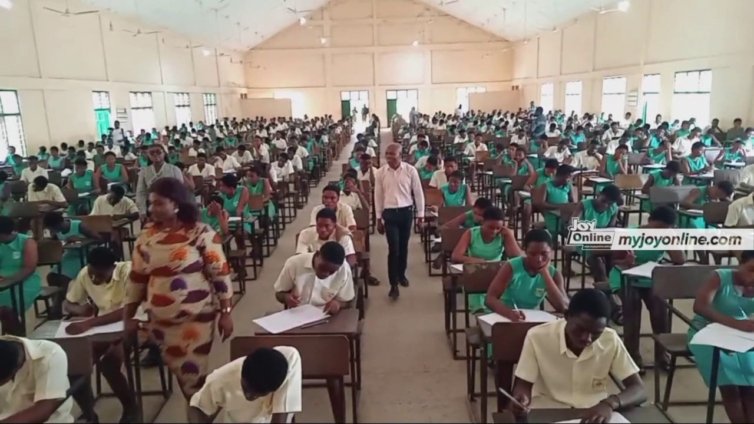
Ghana’s secondary education system is facing a deepening crisis, revealed by the provisional 2025 West African Senior School Certificate Examination (WASSCE) results released by the West African Examinations Council (WAEC). A catastrophic decline in core subjects, particularly Core Mathematics and Social Studies, raises serious concerns about the foundational knowledge of nearly half a million candidates.
Only 48.73% of candidates achieved the minimum A1-C6 passes in Core Mathematics, marking one of the poorest national performances in recent history. The data paints a grim picture, with the outright fail rate (Grade F9) in Core Mathematics nearly quadrupling from 6.10% in 2024 to a shocking 26.77% in 2025. “Nearly one out of every four students who sat for the exam failed the subject outright,” highlighting the scale of the problem.
Social Studies also experienced a dramatic increase in failures, with the F9 rate almost tripling from 9.55% to 27.50%. Failure rates in English Language and Integrated Science more than doubled. This surge in failures corresponds with a significant drop in the A1-C6 pass rate, with Core Mathematics plummeting by almost 18 percentage points – from 66.86% in 2024 to just 48.73% in 2025. The implications are severe, as “more than half of the candidates did not secure the grades required for tertiary admission,” jeopardizing the futures of 461,736 students.
The impact of these results is already being felt. A female Senior High School student, speaking anonymously, linked the decline to challenges within the Free SHS policy. “The free SHS also contributes to the failure of the students,” she admitted, adding that a perceived lack of financial accountability can lead to diminished student focus.
Educationist Professor Stephen Adei believes the root of the problem lies much earlier in the education system. “The main source of the problem happens at the basic school level before the secondary school,” he stated. He warned that Ghana is “almost producing illiterate people at the basic level,” and stressed that “Unless we tackle a fundamental issue… these results will be the best we can hope for.”
The Ghana Education Service (GES) acknowledged the severity of the decline. Daniel Fenyi, the GES Public Relations Officer, confirmed the 2025 results “represent a true and credible reflection of students’ academic performance” and affirmed collaboration with WAEC. However, he admitted, “this result is quite worrying,” while maintaining that the results accurately reflect student competencies: “the results you see are a true reflection of the competencies of our learners.”
WAEC attributes the failures to gaps in core skills. John Kapi, WAEC’s Head of Public Relations, explained on the JOY Super Morning Show that the decline “does not reflect a deviation from the curriculum,” but rather “indicates the need for strengthened teaching and student focus on practical problem-solving skills.”
Mr. Kapi highlighted seven specific areas of weakness in Core Mathematics, including difficulties with simple interest, translating word problems, and interpreting diagrams – all topics within the syllabus. WAEC also noted a concerning trend: candidates’ increasing reliance on “social media diction and non-standard English” in their answers, indicating a broader decline in formal academic communication.
The results have sparked political debate, with the Minority in Parliament criticizing the government’s handling of the education sector. They pointed to the dramatic drop in Core Mathematics – from 66.86% in 2024 to 48.73% in 2025 – contrasting it with improvements seen from 2022 to 2024, and referencing a much lower performance in 2016 (33.12%). The Minority also deemed the GES’s explanation attributing the decline to enhanced invigilation as “unprofessional and unethical,” questioning whether it could be a contributing factor and stressing that invigilation “should not, and must not put fear in the candidates.”
Analysts point to systemic issues, including inadequate teacher distribution. Cletus Seidu Dapilah, MP for Jirapa, cited “inadequate and uneven distribution of teachers across basic schools,” arguing that weak foundations contribute to poor secondary school performance. Dr. Peter Anti Partey, Executive Director of IFEST, called for a data-driven approach, urging the Ministry of Education to identify underperforming schools and implement targeted interventions: “We should ask the Ministry of Education to let us know which schools are pulling the national averages down.”
The Free SHS policy remains a subject of debate. While it has increased enrollment, stakeholders argue it has also strained school resources and increased the workload for teachers, potentially impacting student motivation due to reduced parental financial investment.
Universities are maintaining their admission standards. Prof. Gordon Awandare, Pro Vice Chancellor of the University of Ghana, stated the university “will not lower its admission cut‑off points for the 2025/2026 academic year,” citing limited space and the need to uphold academic rigor. He advised struggling students: “We will advise that if they really want to come to Legon, they should resit some of the papers and improve their aggregates and try again.”
The release of the results was also overshadowed by a significant “integrity crisis.” WAEC reported that 6,295 candidates had subject results annulled for bringing unauthorized materials, and the entire results of 653 candidates were canceled for possessing mobile phones. Furthermore, results from 185 schools were withheld due to suspected collusion. Criminal charges have been filed against 35 individuals, including 19 teachers, with 19 already convicted to fines or imprisonment. WAEC confirmed that the convicted teachers’ names will be forwarded to the GES for disciplinary action.
The 2025 WASSCE results represent a critical juncture for Ghana’s education system. The findings highlight a disconnect between teaching methods and the practical skills needed for success. Addressing the dual challenges of declining performance and widespread malpractice requires an urgent and comprehensive national response. For Ghana, striving to build a skilled workforce, the fact that a majority of high school graduates are deemed unprepared for university raises fundamental questions about national development. Educational stakeholders must leverage this data to implement measurable reforms, bridge the critical skills gap, and restore trust in the examination process.
Image Source: MYJOYONLINE