Ghana’s TVET Financing System Is Structurally Misaligned, Education Watch Director Warns
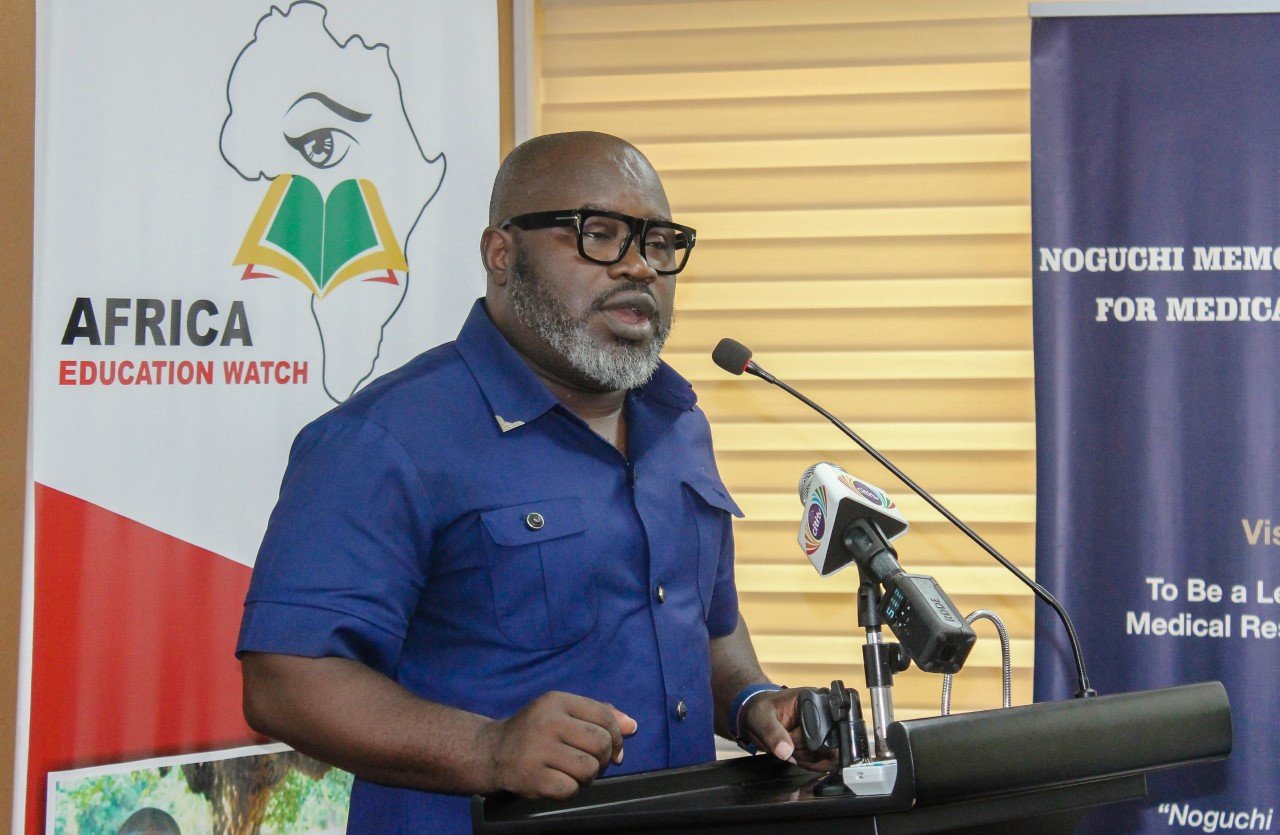
Ghana’s Technical and Vocational Education and Training sector is facing a deepening financial crisis that threatens to undermine the country’s ability to equip its young population with marketable skills, one of the nation’s leading education policy voices has warned.
Kofi Asare, Executive Director of Africa Education Watch, delivered a stark assessment of the TVET financing landscape at an International Conference on Education and Humanities organised by the Faculty of Education and Communication Sciences of the University of Skills Training and Entrepreneurial Development (USTED). Speaking under the theme Financing the Future: Aligning TVET Financing with Equitable Access, Quality and Human-Centred Skills in Ghana, Asare argued that the current funding model is fundamentally broken.
His central contention is straightforward: despite Ghana recording significant economic growth over the past two decades, that growth has not translated into adequate job creation for young people. The expansion has been driven largely by the services and extractive sectors, which generate far fewer employment opportunities than manufacturing and other labour-intensive industries. TVET, which ought to serve as the bridge between education and productive employment, has been left behind.
The numbers paint a troubling picture. Although TVET enrolment has increased substantially over the past decade, the sector’s share of national education expenditure remains well below comparable programmes in several African countries. The most acute gap lies in practical training: the annual allocation for practical materials per student stands at approximately GH₳33, yet the actual cost of hands-on training ranges between GH₳4,000 and GH₳9,000 depending on the trade area. That represents a financing gap of roughly 94 per cent.
The consequences are predictable. Institutions have been forced to scale down practical sessions, compromising the quality of training that students receive. Employer surveys cited by Asare reveal the damage: 80 per cent of employers identified inadequate practical training as their biggest concern regarding TVET graduates, while 70 per cent pointed to deficiencies in soft skills. A further 40 per cent highlighted a mismatch between graduates’ skills and labour market demands, and 30 per cent raised concerns about outdated technological knowledge.
The findings arrive at a time of broader turbulence in Ghana’s education sector. A recent teachers’ strike that disrupted learning in 80 schools across Tarkwa underscored the systemic pressures facing the system, from funding shortfalls to labour disputes that leave students stranded.
Gender disparity adds another layer of concern. Male students account for more than 73 per cent of TVET enrolment, suggesting that significant barriers continue to hinder female participation in technical and vocational training. Closing this gap is not merely a matter of equity; it is an economic imperative in a country where women make up roughly half the population.
The financing shortfall also sits uneasily alongside Ghana’s broader development ambitions. The country’s youthful demographic profile is frequently cited as a potential engine of growth, but that demographic dividend can only be realised if young people acquire the competencies that employers actually need. Without a functioning TVET system, the promise of a skilled workforce remains aspirational rather than real.
Asare called for increased investment in the sector, stronger partnerships between training institutions and industry, and financing reforms that prioritise quality training outcomes. He urged policymakers, development partners and industry stakeholders to collaborate on building a framework that supports equitable access and equips learners with future-ready competencies.
The challenge, as Asare framed it, is not simply about spending more money. It is about restructuring how TVET is financed so that resources reach the classroom and the workshop floor, where the gap between aspiration and reality is widest. Until that alignment happens, Ghana’s technical and vocational training system will continue to produce graduates whose qualifications do not match the demands of the labour market — a mismatch the country can ill afford.
Image Source: GHANA BUSINESS NEWS