Fear and Silence Define Kingdom of eSwatini's Politics Five Years After Massacre
This month marks a sombre milestone for the Kingdom of eSwatini. Five years ago, on June 29, 2021, peaceful pro-democracy activists gathered in the capital, Mbabane, to deliver a petition calling for political reforms. Police responded with lethal force, killing at least 46 unarmed demonstrators and bystanders in two days. Hundreds more sustained wounds. A 17-year-old student was left paralysed. Many others disappeared or were tortured.
Half a decade on, fear and silence define the landlocked southern African monarchy of 1.5 million people. None of the persons suspected of perpetrating the violence has been brought to book. King Mswati III, who is celebrating his Ruby Jubilee this year, four decades since his coronation at the age of 18, has largely avoided the topic, preferring to preach stability, peace and unity.
The contrast between spectacle and repression could not be starker. Regional leaders, including South African President Cyril Ramaphosa, Botswana’s Duma Boko, Lesotho’s King Letsie III, and the presidents of Mozambique and Zimbabwe, attended official celebrations in Mbabane. So did ex-presidents Ian Khama, Joseph Kabila, and Jacob Zuma, the king’s father-in-law. Corporate sponsors from Standard Bank to Nedbank took out lavish advertisements lauding the monarch. Yet behind the pomp, critics say, lies the region’s worst record of state-driven repression.
The political toll is stark. One member of parliament sits in jail. Another lives in exile. Thulani Maseko, a prominent human rights lawyer and columnist, was shot dead at his home in January 2023. His widow, Tanele Maseko, is convinced the king ordered the killing. “It was around 8pm when Thulani expressed his concerns about being killed. The king had spoken at around 3pm. At 10.15pm, he was shot dead,” she told The Nation. “We’re not children here. The king meant what he said.”
Other cases paint a similarly grim picture. Unionist Sipho Jele died in custody days after his arrest during a May Day rally for wearing a T-shirt bearing the logo of the banned People’s Democratic Movement (Pudemo). Student Thabani Nkomonye’s death also remains shrouded in suspicion. The targeting of minority groups, including the LGBTI+ community, has drawn further condemnation from human rights organisations.
King Mswati III, the world’s second longest-reigning monarch after Sweden’s Carl XVI Gustaf, has ruled since 1986. He presides over a Tinkhundla system of governance that bans political parties and allows the monarch to appoint prime ministers at will. Fifteen prime ministers, seven of them in acting positions, have served under his reign, a revolving door that raises serious questions about accountability and succession.
The economic picture offers little consolation. eSwatini’s GDP sits at $4.86 billion, yielding a per capita income of roughly $3,900, placing the kingdom 149th globally. Nearly 60 per cent of the population lives below the poverty line, a figure that Prime Minister Russell Dlamini himself acknowledged when he took office in 2023. Things have since worsened. Civil servants have been sent from pillar to post demanding overdue salary hikes, and in April, 20 eSwatini nationals were arrested in South Africa for illegal mining.
Investigative journalist Zweli Dlamini, one of a handful of reporters working inside the kingdom, describes the atmosphere bluntly: “Fear and silence.” He notes that world leaders, whether from Taiwan, China, the United States, or the Southern African Development Community, have shown little interest in confronting Mswati’s abuses.
The presence of Madagascar’s ousted leader Andry Rajoelina, now at large after fleeing amid protests, at the celebrations drew particular scorn. “When people get ousted or step down, they find comfort in Mswati’s arms,” said exiled Pudemo activist Pius Vilakati. “He’s run out of friends, so he’s taking everyone.”
Even within the royal family, cracks have appeared. Princess Sikhanyiso has publicly flagged palace power struggles. “The king is pretty much isolated,” she said in the documentary Without A King, filmed before the 2021 massacre.
As pro-democracy activists prepare to commemorate the anniversary, veteran editor Bheki Makhubu, who was himself incarcerated alongside Maseko on trumped-up charges, offers a measured but sobering assessment. “Nobody can dare make a noise now,” he says. Yet journalist Dlamini strikes a note of guarded optimism: “What we saw in 2021 made people think and reflect. It won’t be long, but at the same time it won’t be short.”
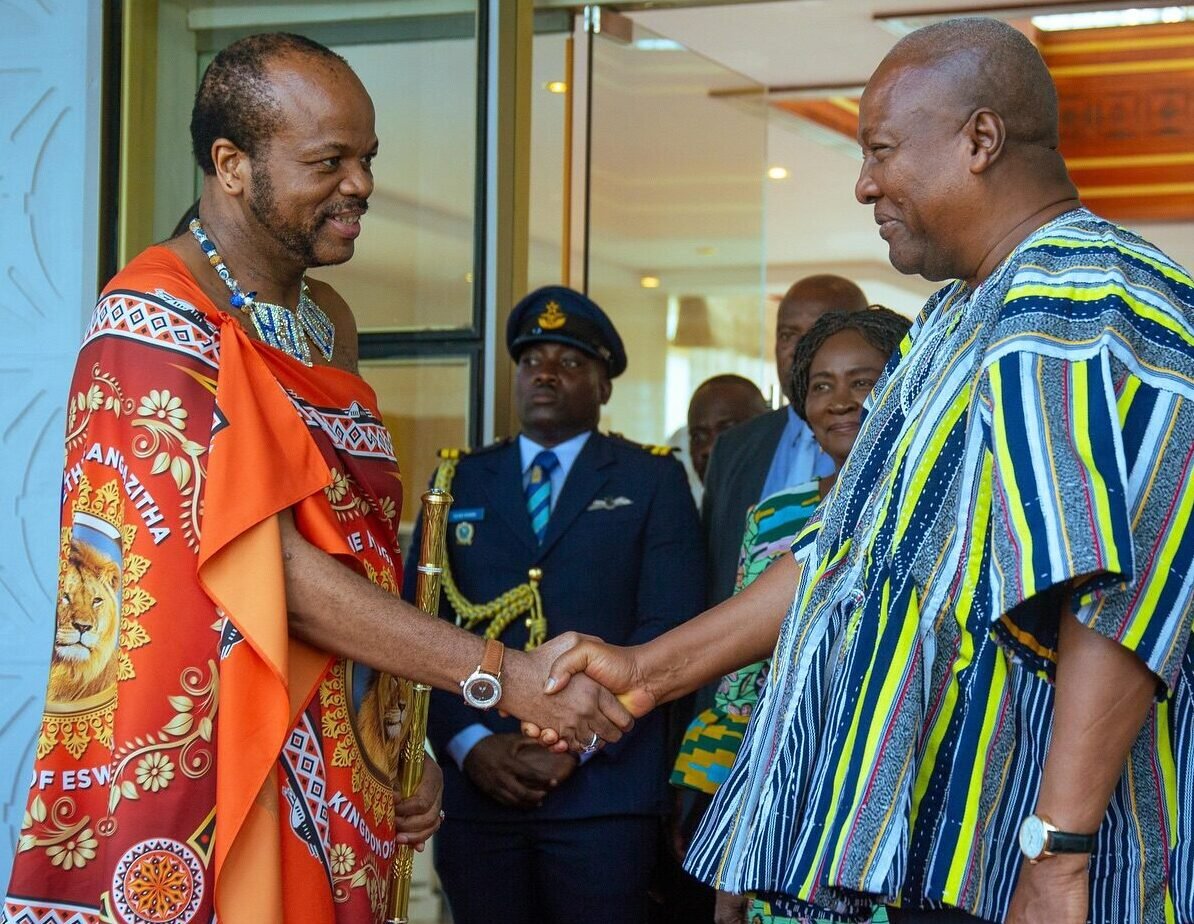
Ghana’s President John Mahama, who has championed democratic governance across the continent, has argued that democracy remains Africa’s greatest strategic asset. The situation in eSwatini is a stark reminder of what happens when that asset is suppressed.
Image Source: GHANA BUSINESS NEWS