Seventeen communities in the North East and Oti Regions have been declared open defecation-free, achieving 100 per cent coverage of latrine facilities.
The communities, located in the West Mamprusi and Jasikan Municipalities, attained this milestone with assistance from Plan International Ghana through its Community Led Total Sanitation (CLTS) approach.
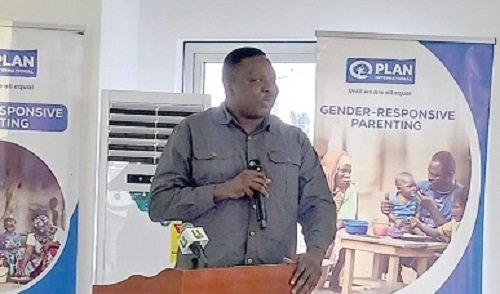
William Domapielle, Project Manager of Plan International Ghana’s Integrated Package for Sustainable Development Project (IPADEV), announced the achievement at the project’s closure meeting in Accra. He explained that the IPADEV project, supported by their German national office, aimed to create a resilient and protective environment for children, particularly girls, by improving access to Water, Sanitation and Hygiene (WASH) facilities, Early Childhood Care and Development (ECCD), education, and healthcare.
The project, which ran from October 2022 to December 2025, initially targeted 20 communities across the two municipalities.
According to Mr. Domapielle, a total of 667 new household latrines were constructed using the CLTS approach, increasing household latrine coverage from 37 per cent to 101 per cent. Existing facilities were also upgraded, and hand-washing stations were provided to schools, health centres, and community centres.
Beyond infrastructure, the project fostered social change. “We established a ‘real fathers’ club’ to promote positive masculinity and gender-responsive parenting,” Mr. Domapielle stated. “Alongside this, we supported 37 village savings and loans associations.”
These initiatives, he added, have led to increased male participation in childcare and household decision-making, reduced the workload on women, and empowered communities with the financial and social resources to sustain improved WASH practices.
Ibrahim Tia, the North East Regional Minister, praised Plan International Ghana for its impactful work throughout the country, and specifically within his region.
Constant Tchona, Country Director of Plan International Ghana, emphasized the link between improved WASH services and the empowerment of girls and women. “Access to improved WASH is essential for enhancing their dignity and strengthening their position within the community,” he said.
Mr. Tchona highlighted the broader sanitation challenges in Ghana, noting that data from 2023 indicated only 25 per cent of Ghanaians have access to basic sanitation, with 56 per cent relying on shared latrines, 1 per cent using unimproved facilities, and 18 per cent still practicing open defecation. This situation puts three in every four households at risk of consuming faecal-contaminated water.
He further stated that the IPADEV project had performed strongly across all indicators and introduced innovative solutions, such as establishing local spare-part supply systems for hand pumps, reducing the need for communities to travel long distances for repairs.
Artaldus Sung Kuuntanaa, a child sanitation diplomat, urged children to adopt good hygiene practices and educate their peers and families about the negative environmental impacts of unsafe sanitation.
Image Source: MYJOYONLINE